🇵🇱 Wczoraj Tomek i ja rozegraliśmy kolejną treningową partię w General d’Armee. Wciąż korzystamy z mniejszych armii niż te sugerowane w podręczniku i pomijamy część zasad, ponieważ uwzględnienie wszystkiego na tym etapie znacznie utrudniłoby naukę systemu. Planujemy jednak wrócić do tych zasad w niedalekiej przyszłości.
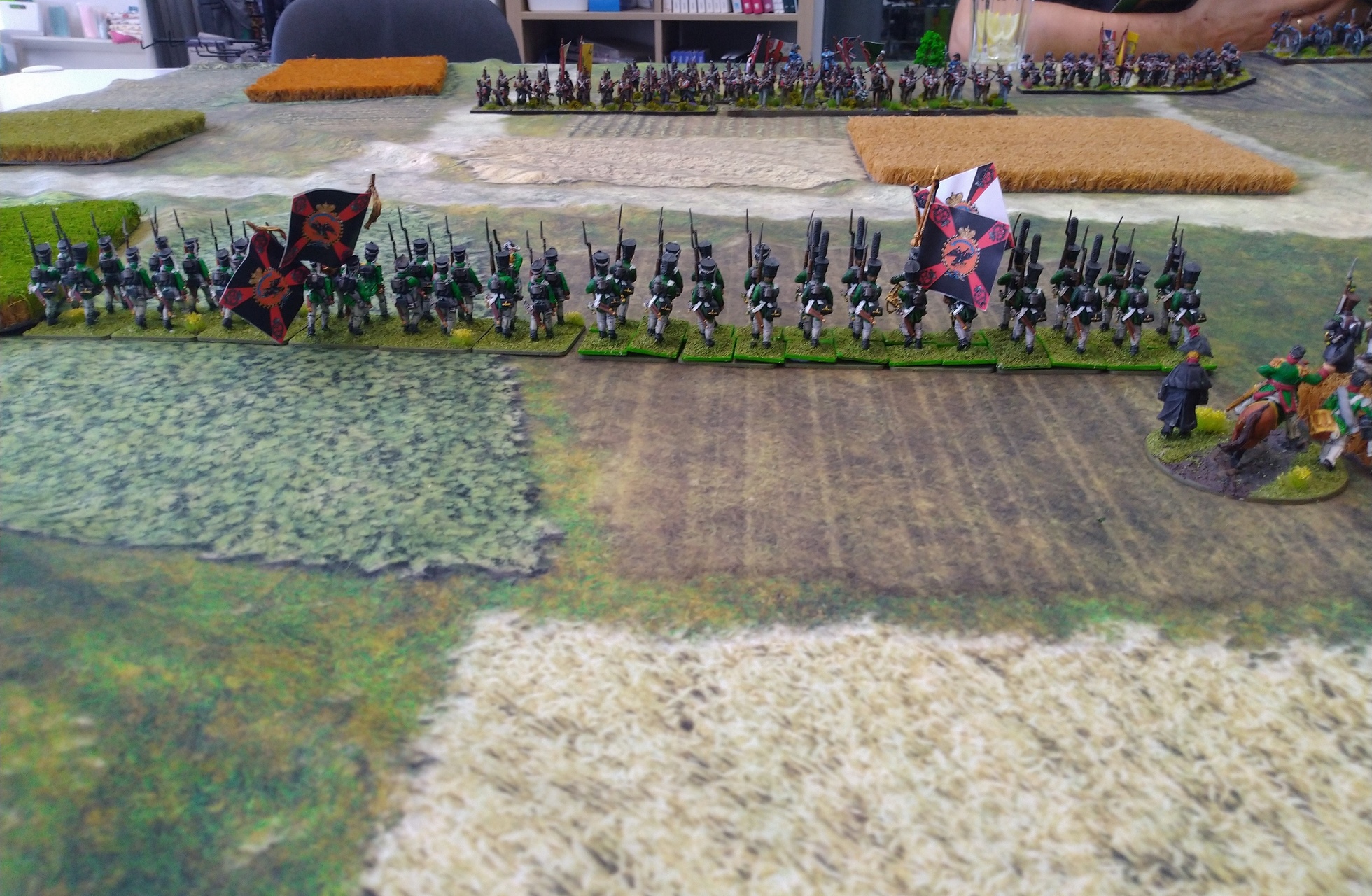
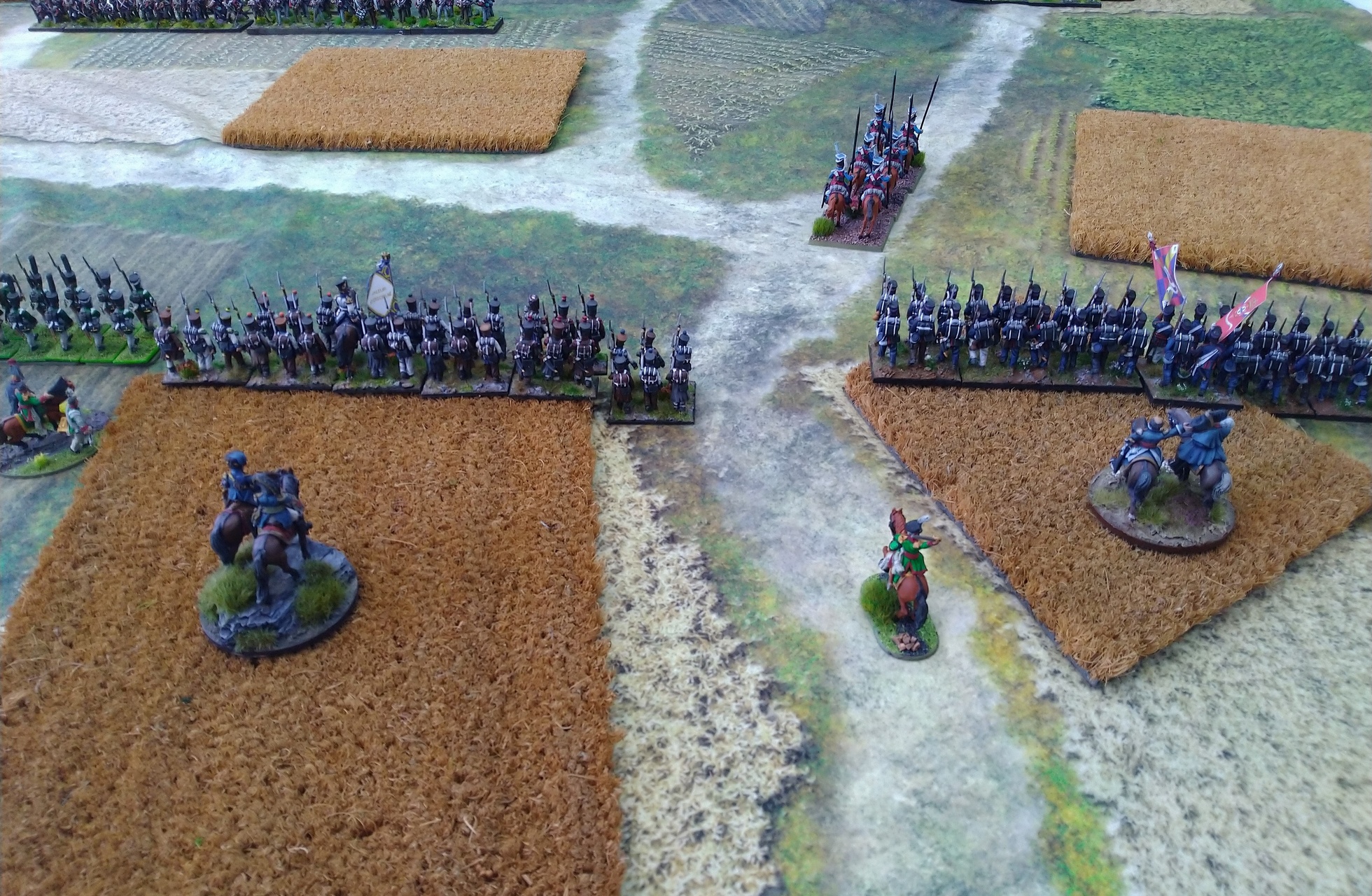
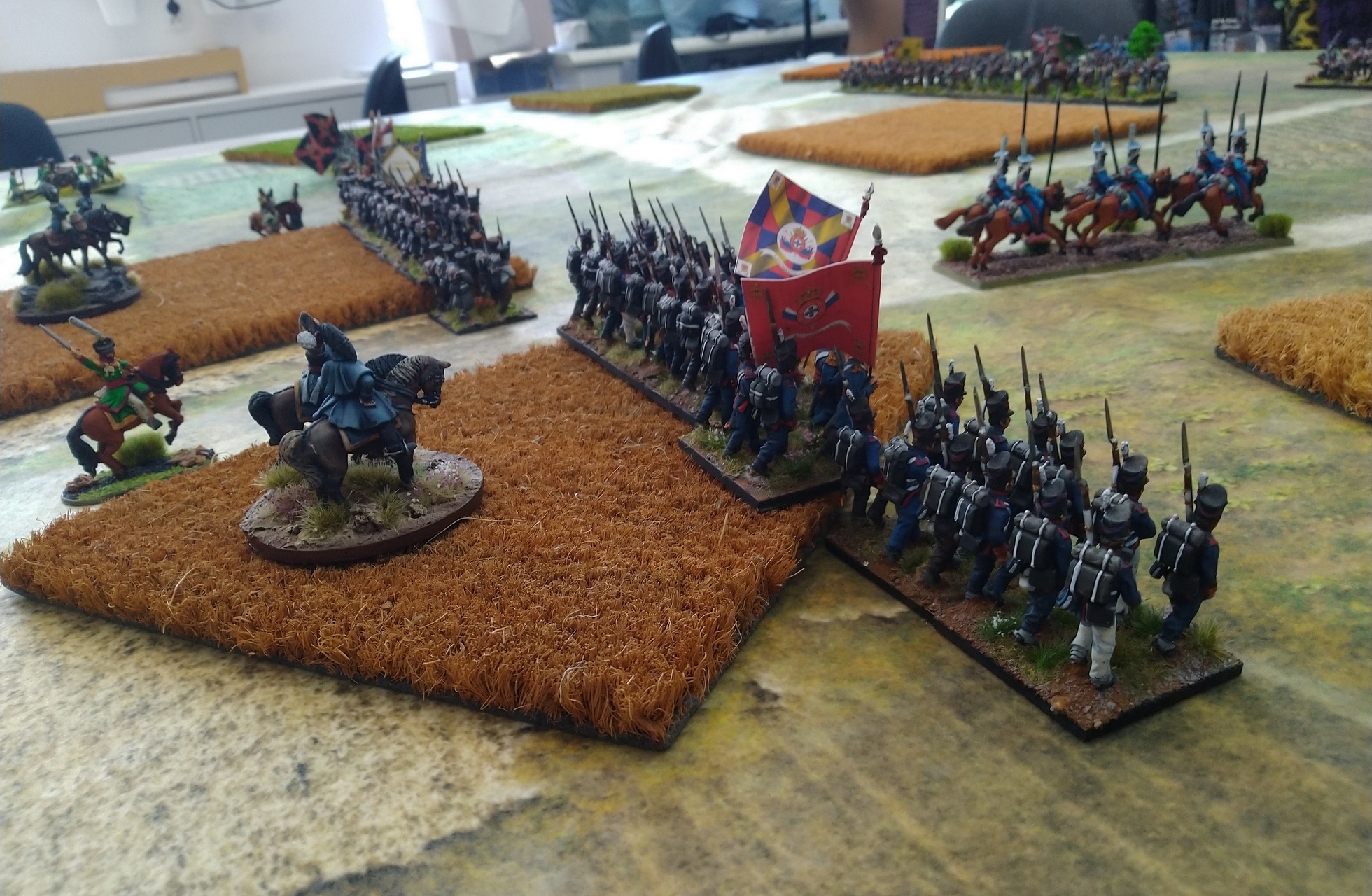
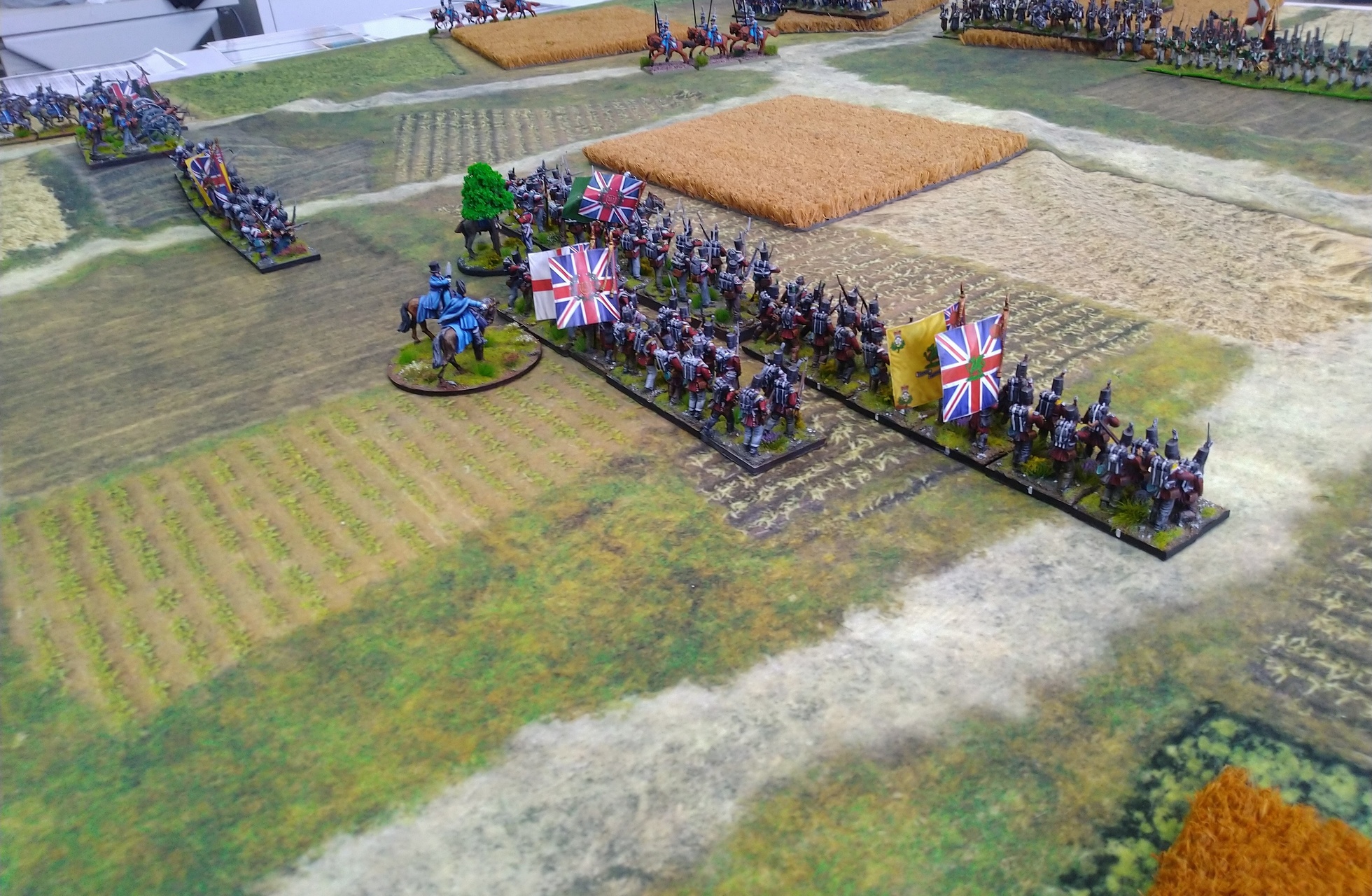
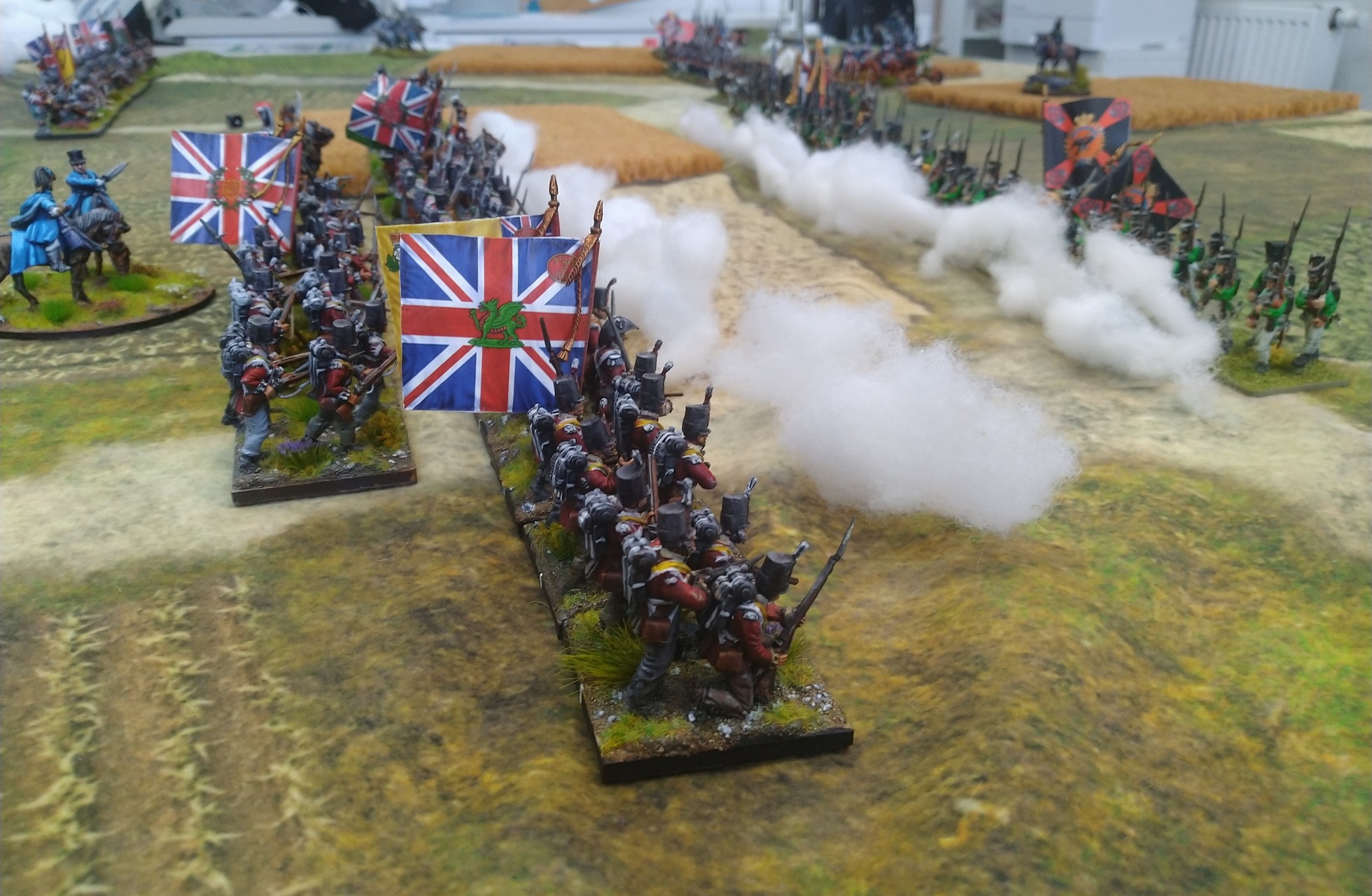
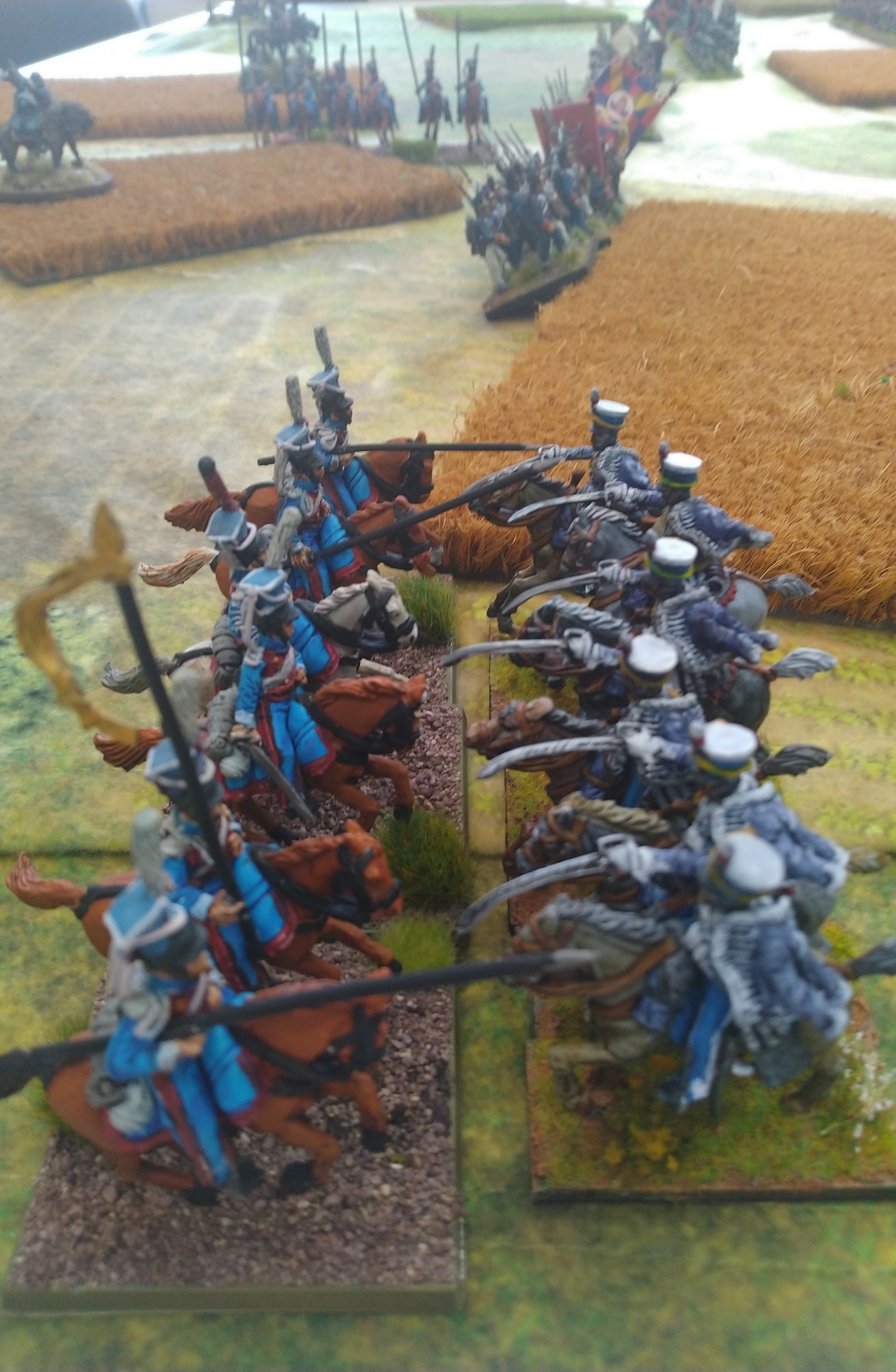
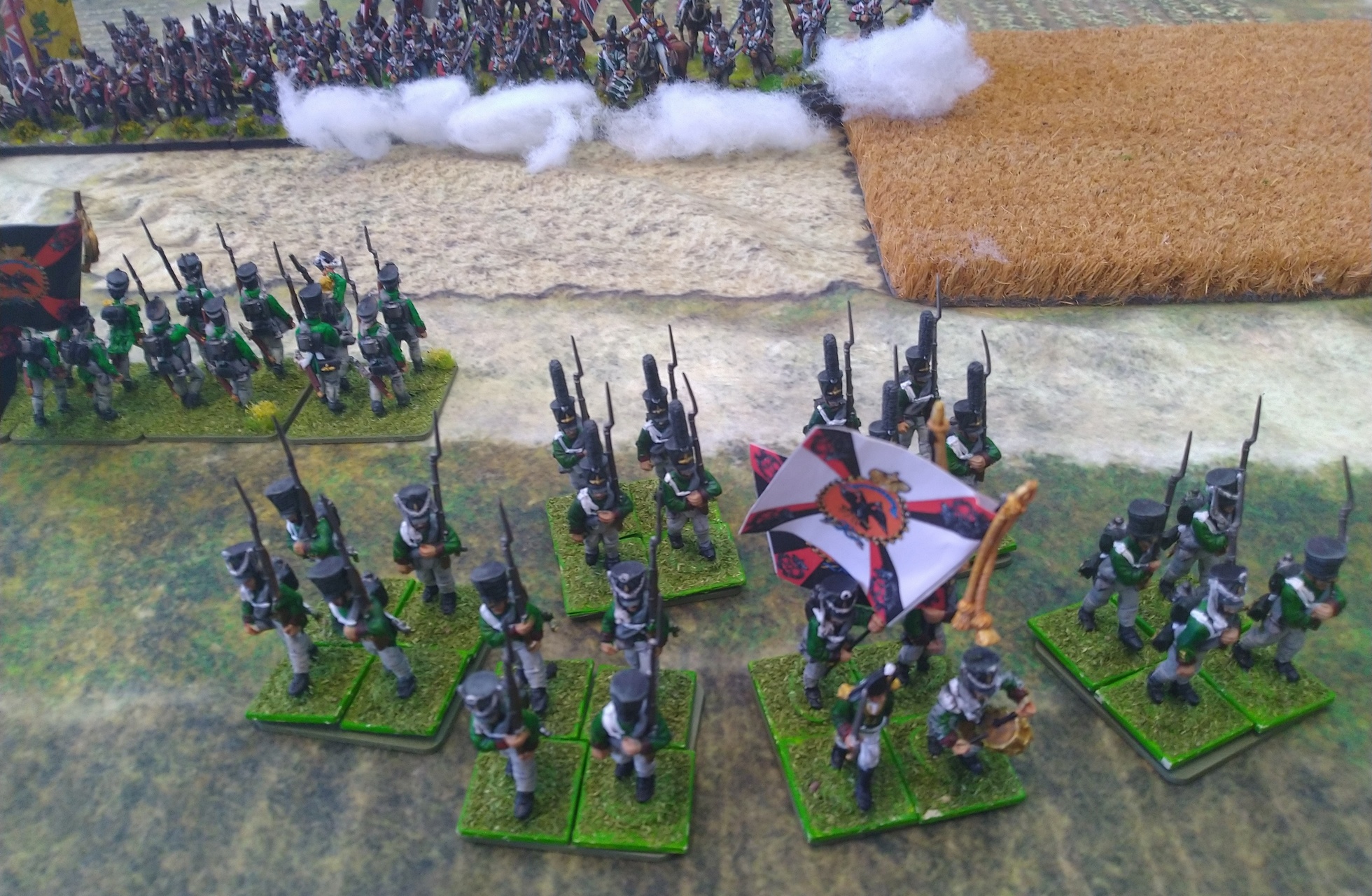
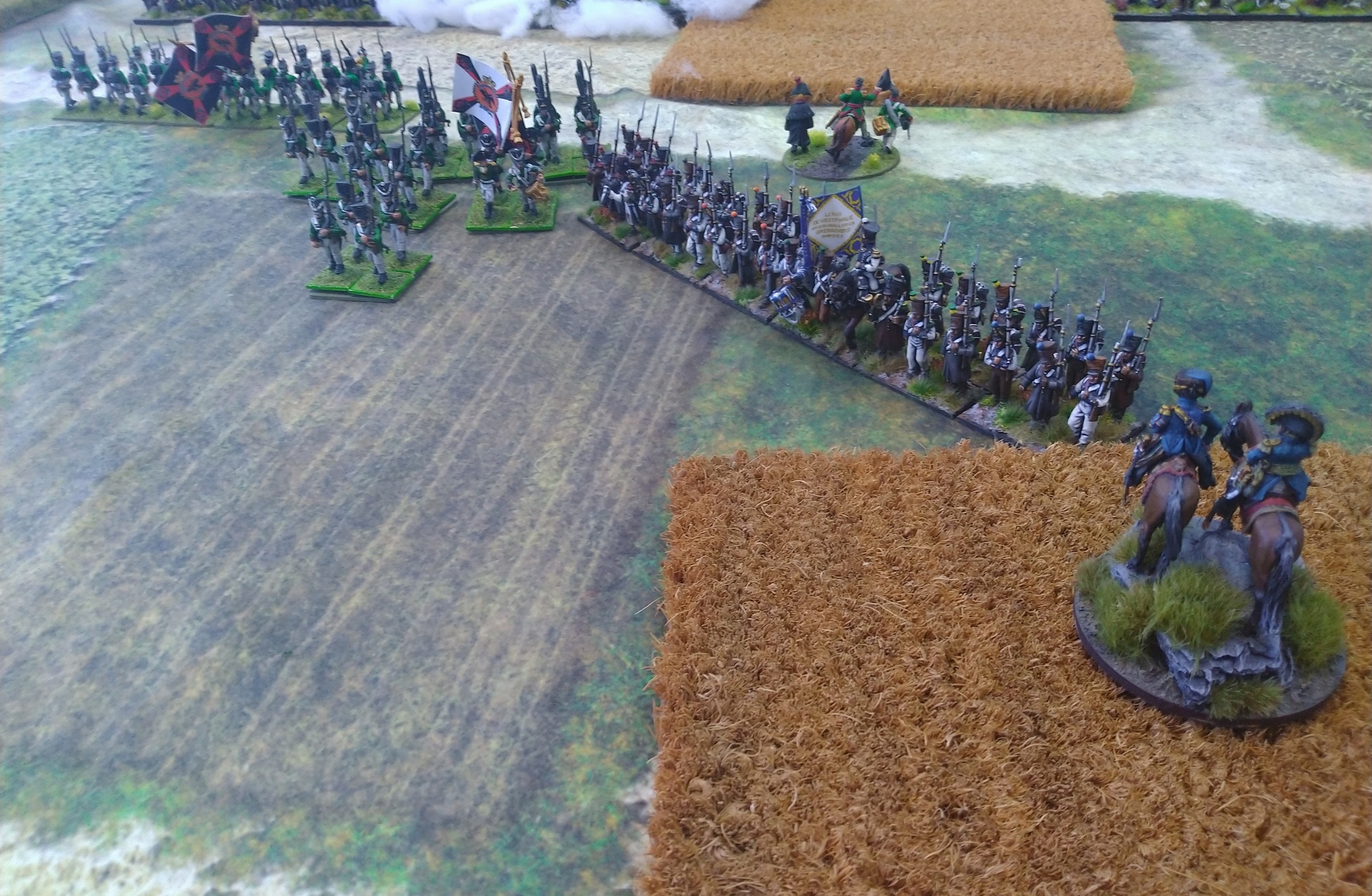
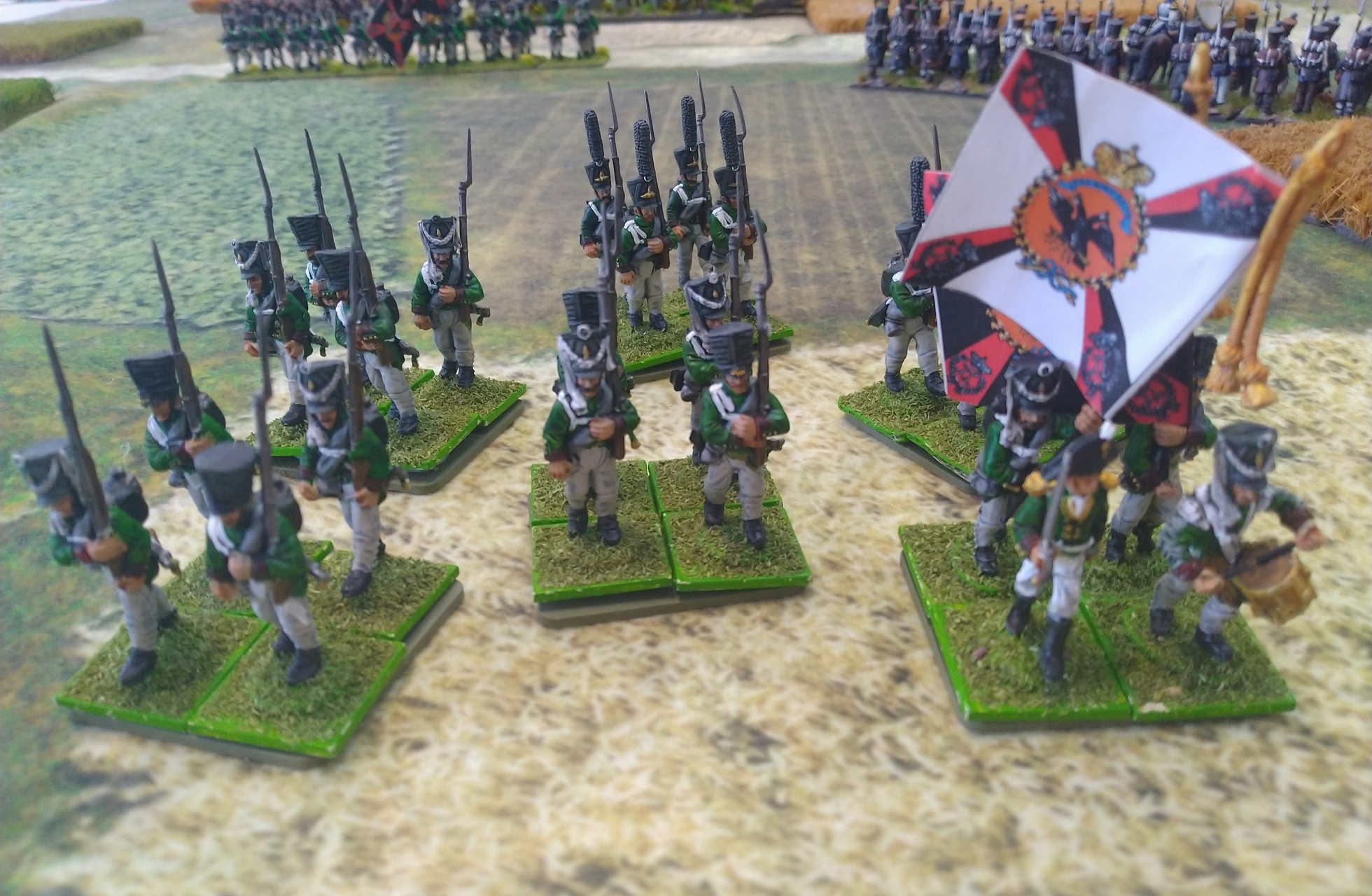
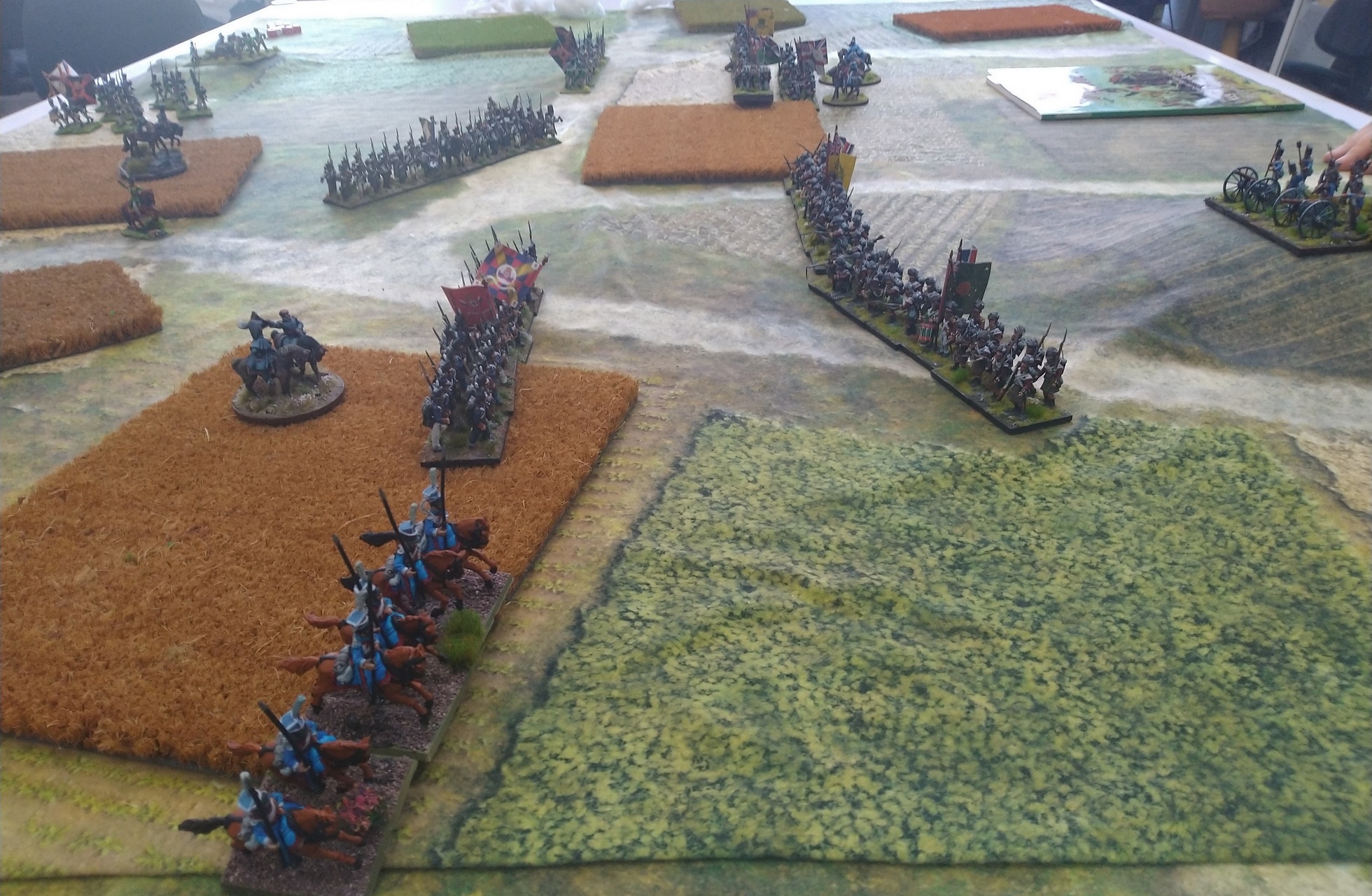
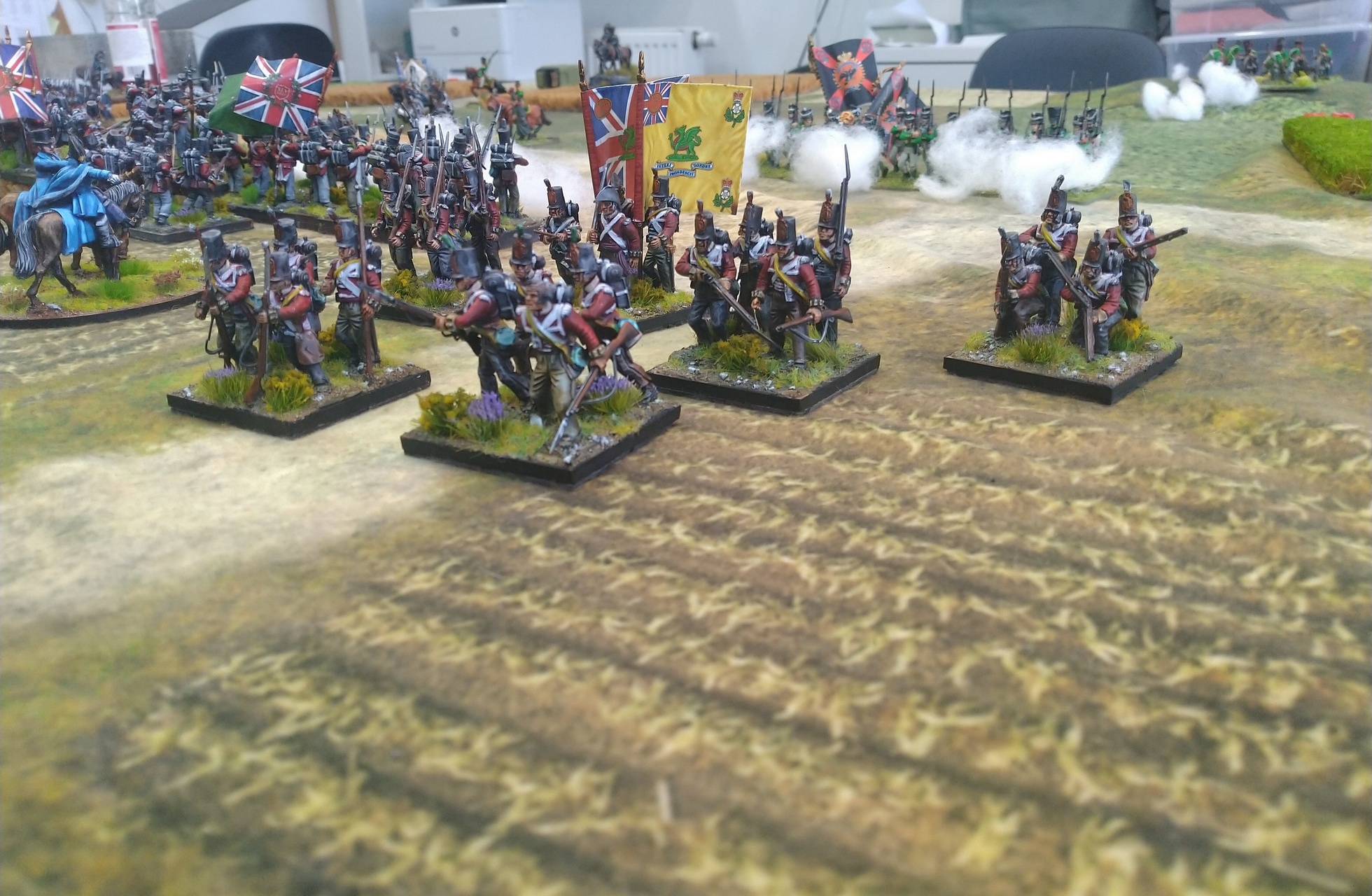
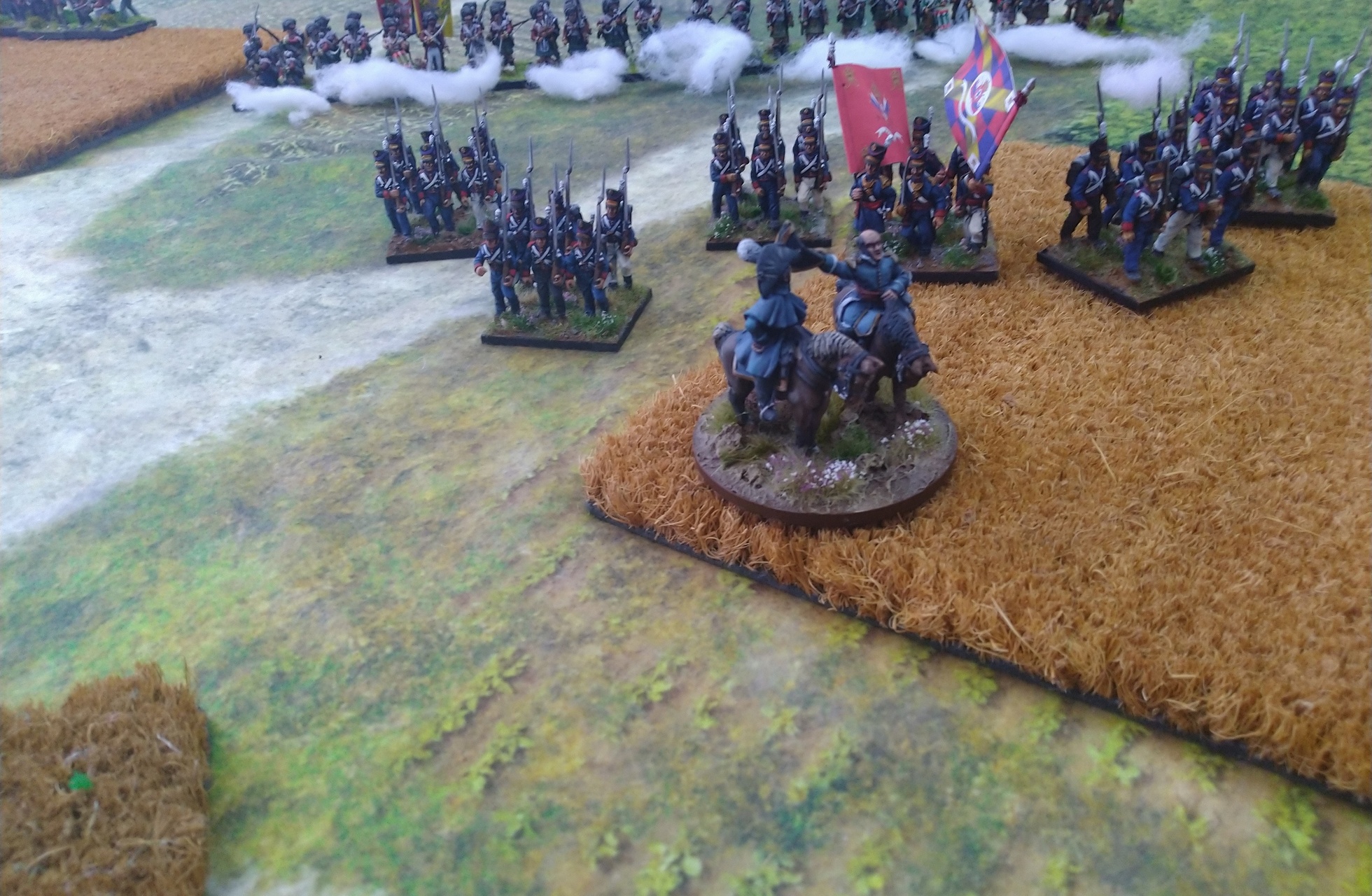
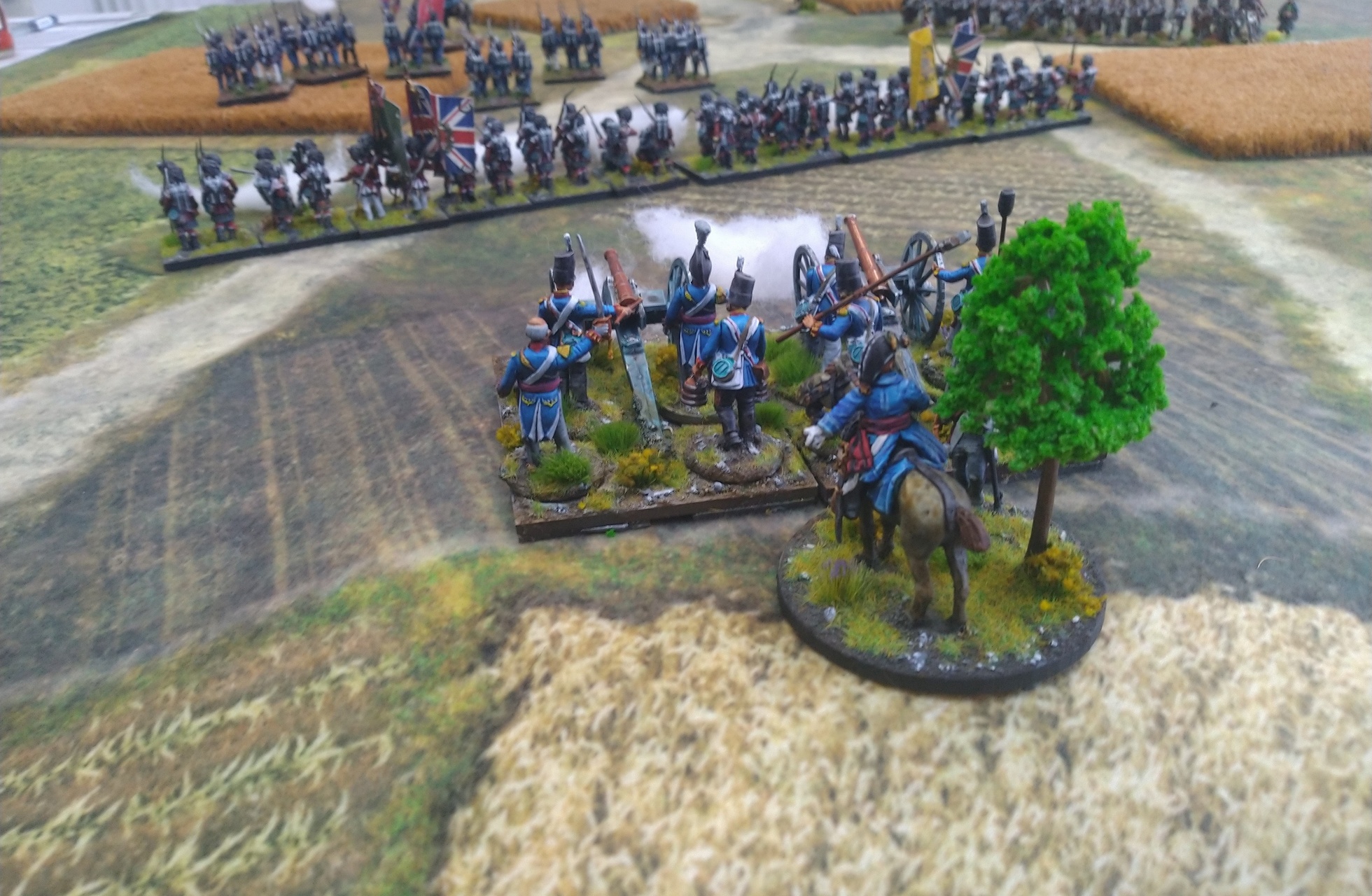
W sobotę ponownie zagraliśmy stosunkowo niewielkimi siłami rozstawionymi na stole – bez Fog of War, bez odwodów i z wszystkimi jednostkami widocznymi od samego początku – po prostu w najprostszy możliwy sposób, aby nauczyć się systemu. Tomek dowodził Brytyjczykami, a ja prowadziłem siły złożone z Rosjan i innych europejskich kontyngentów, ponieważ chcieliśmy użyć wyłącznie pomalowanych figurek.
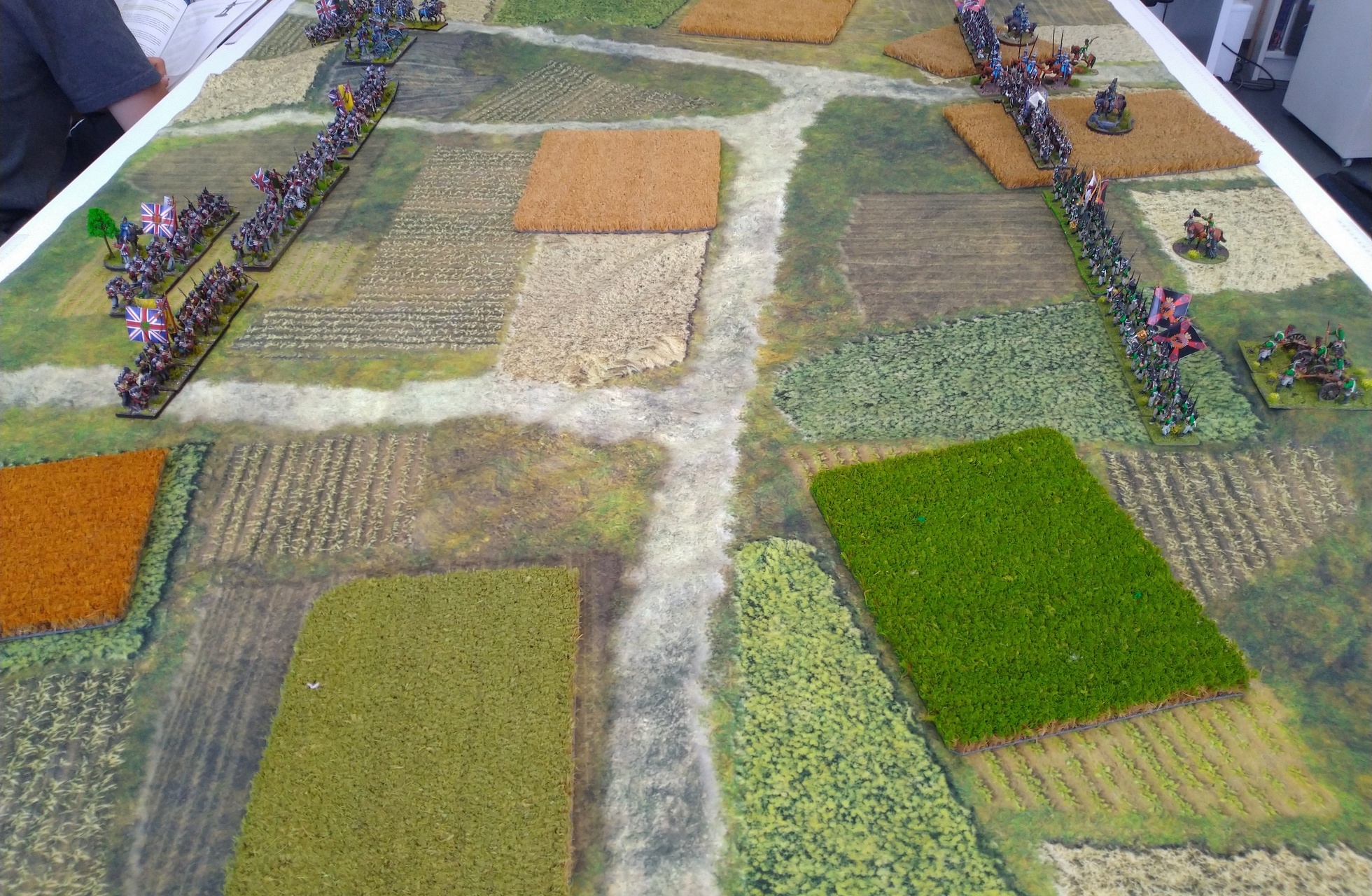
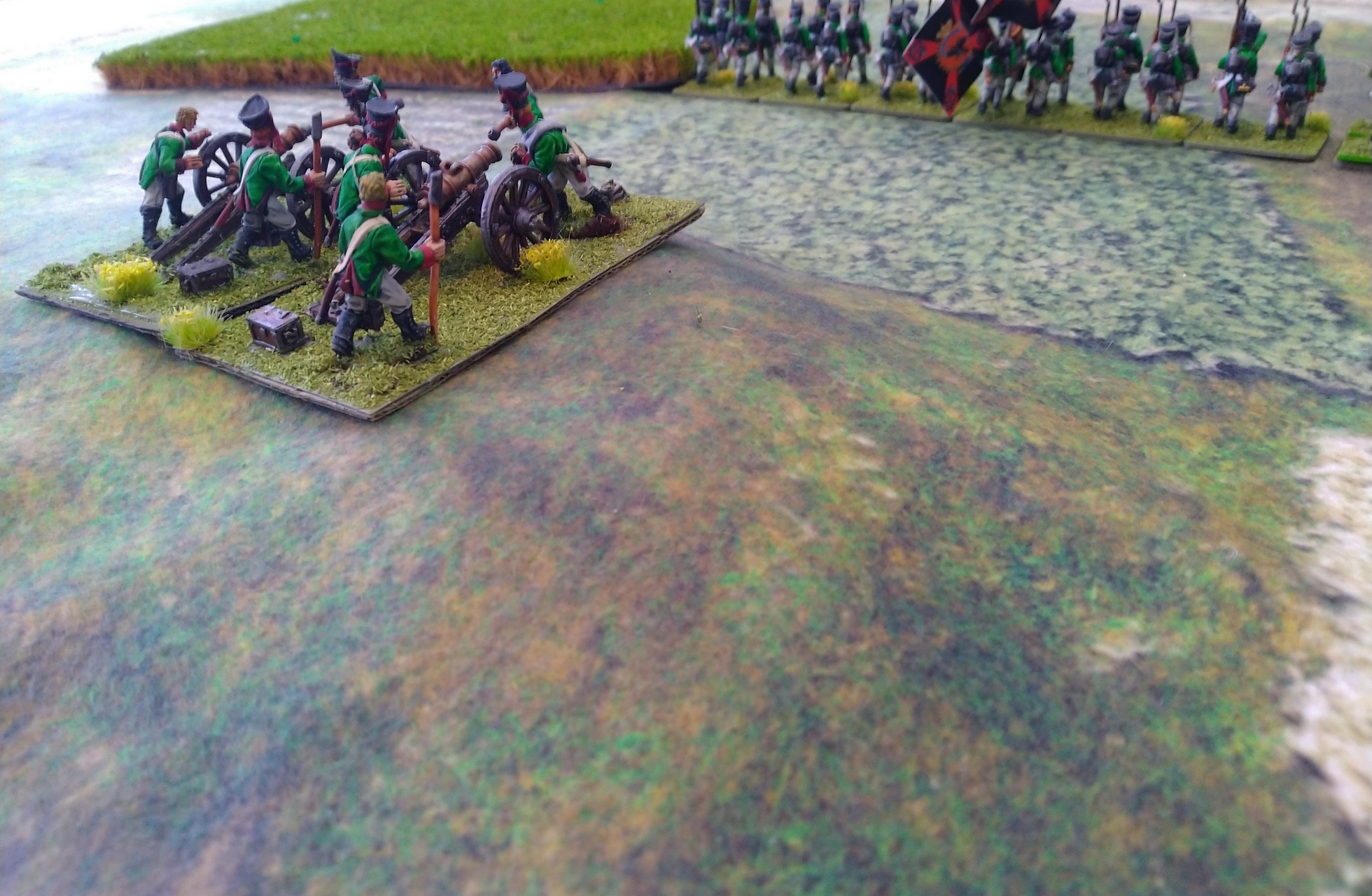
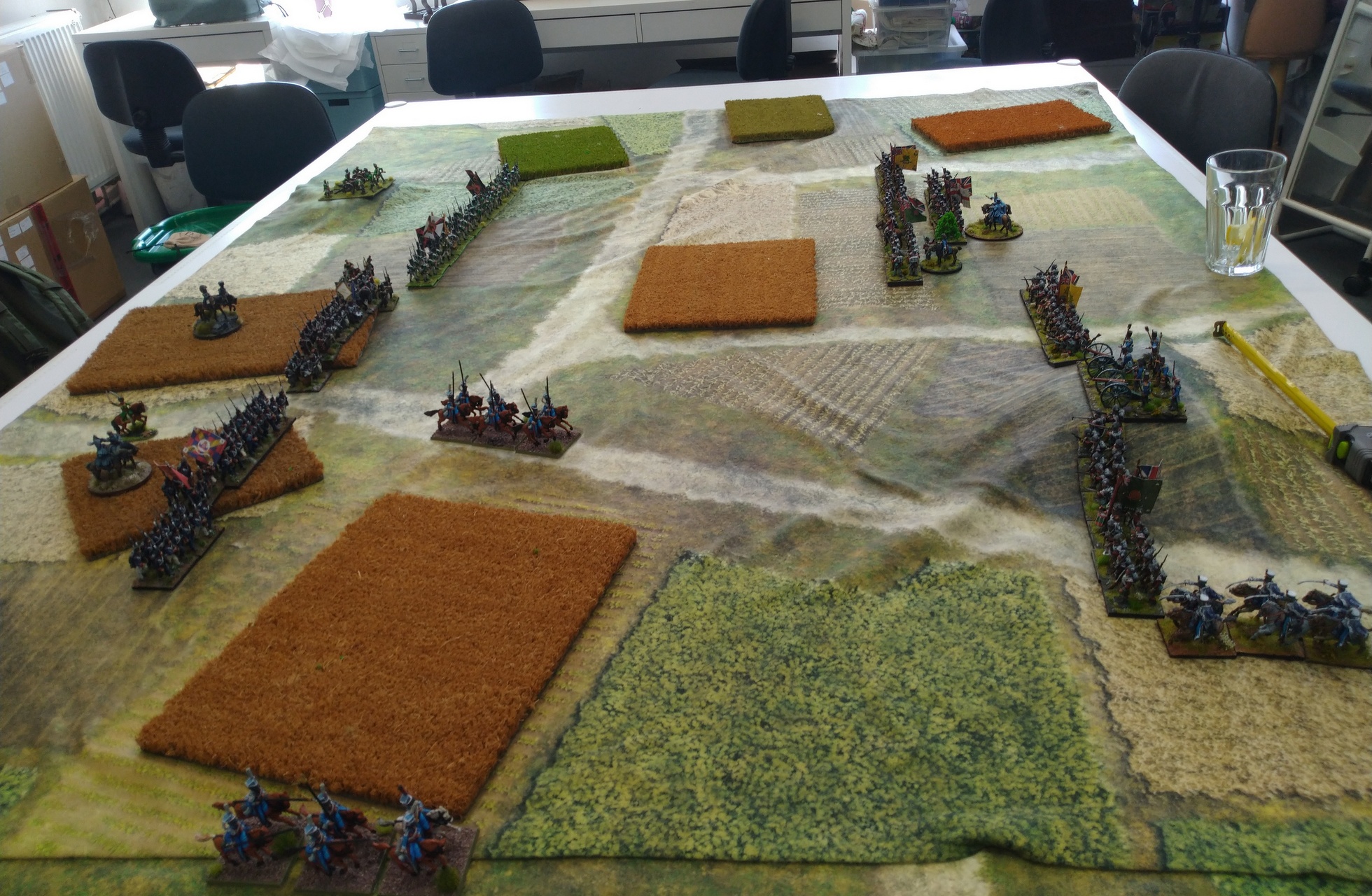
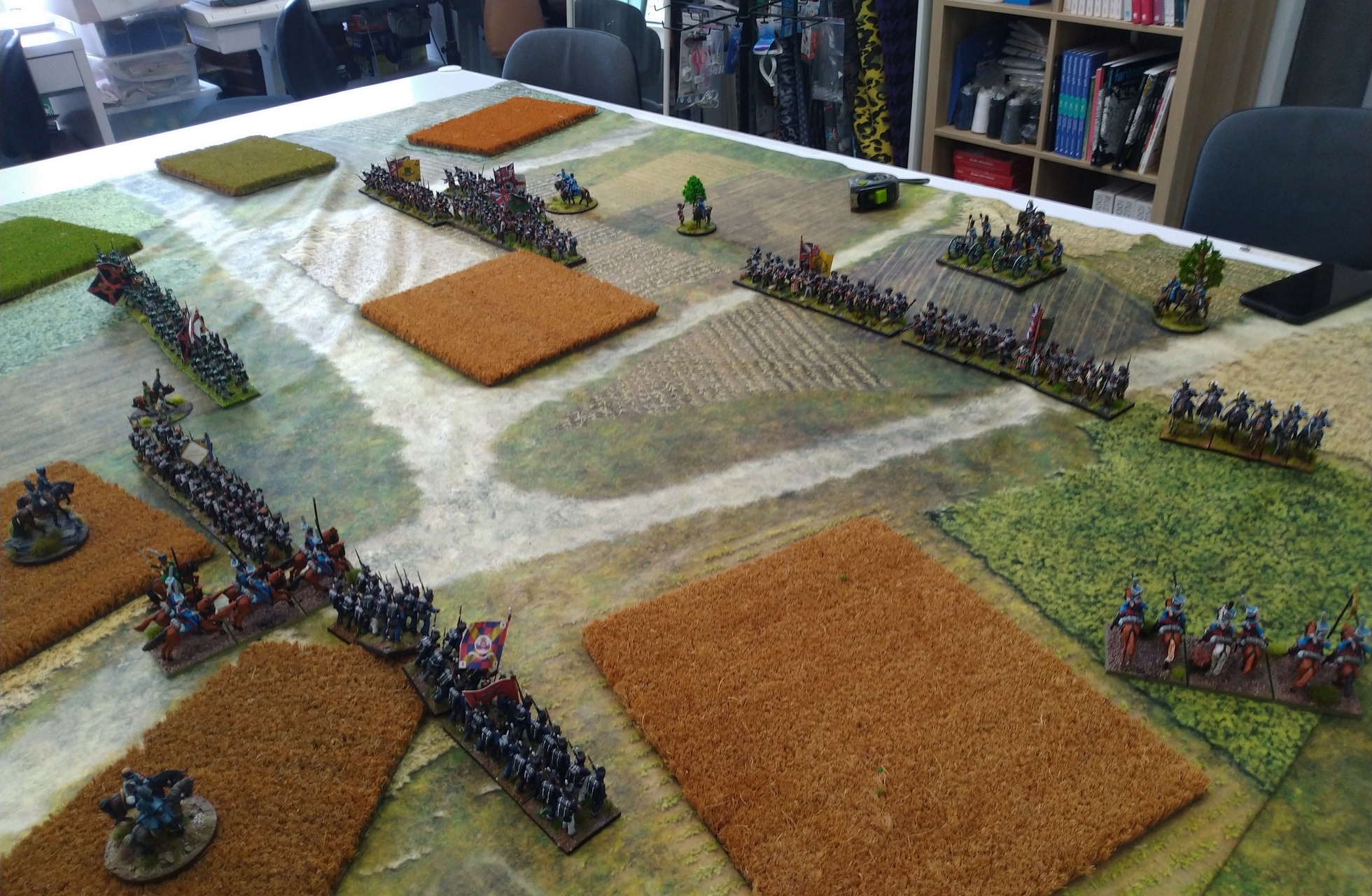
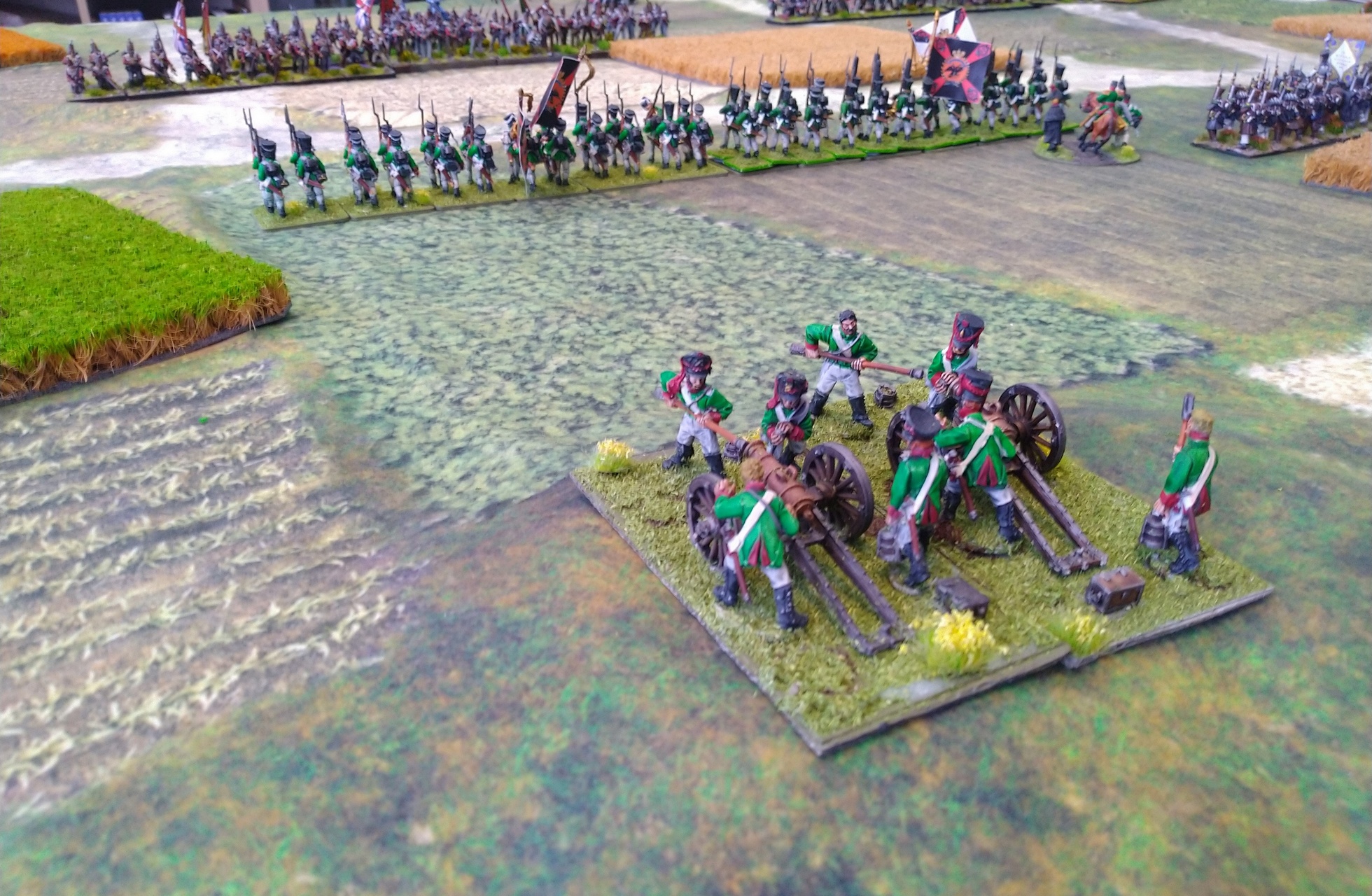
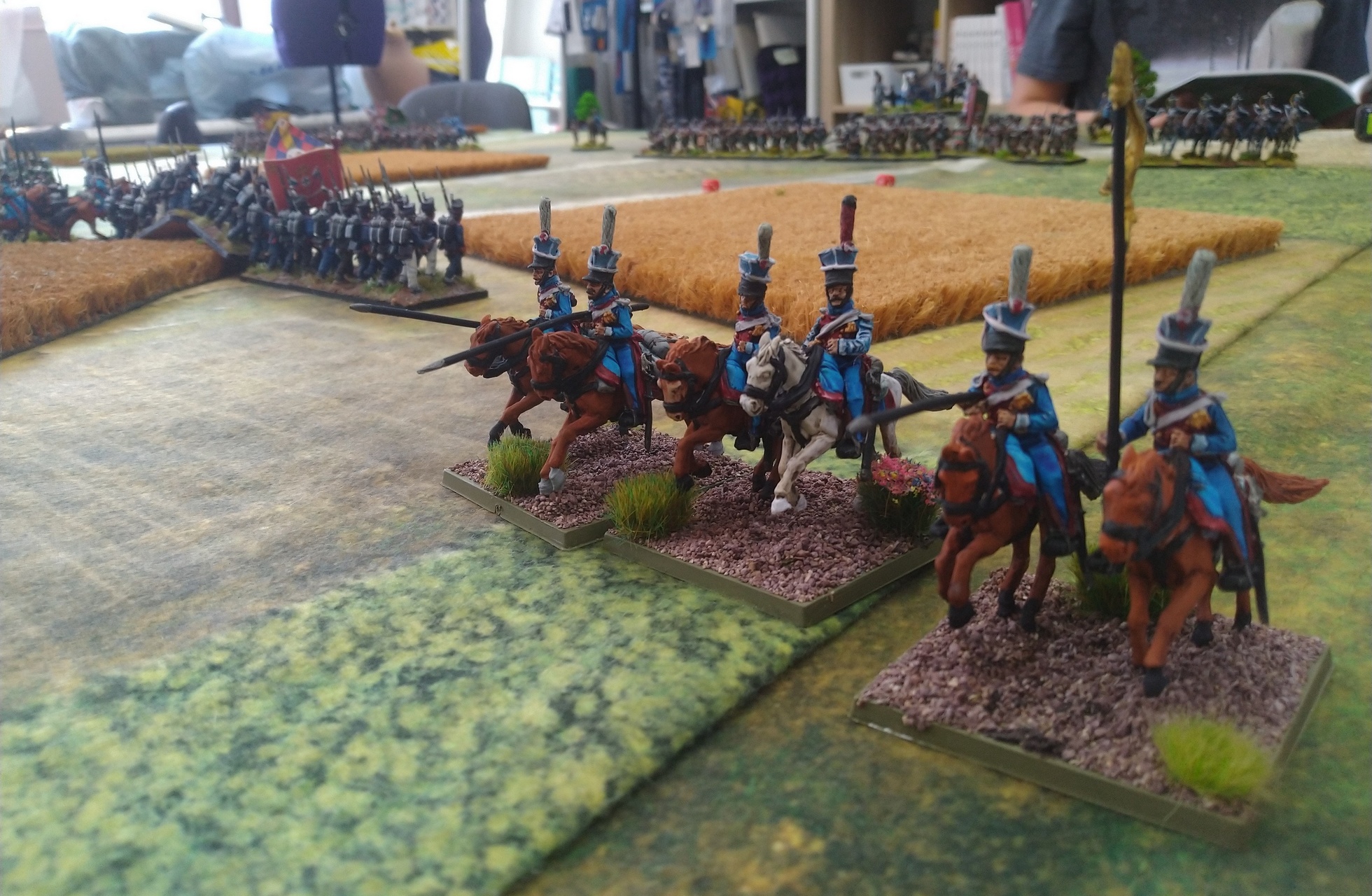
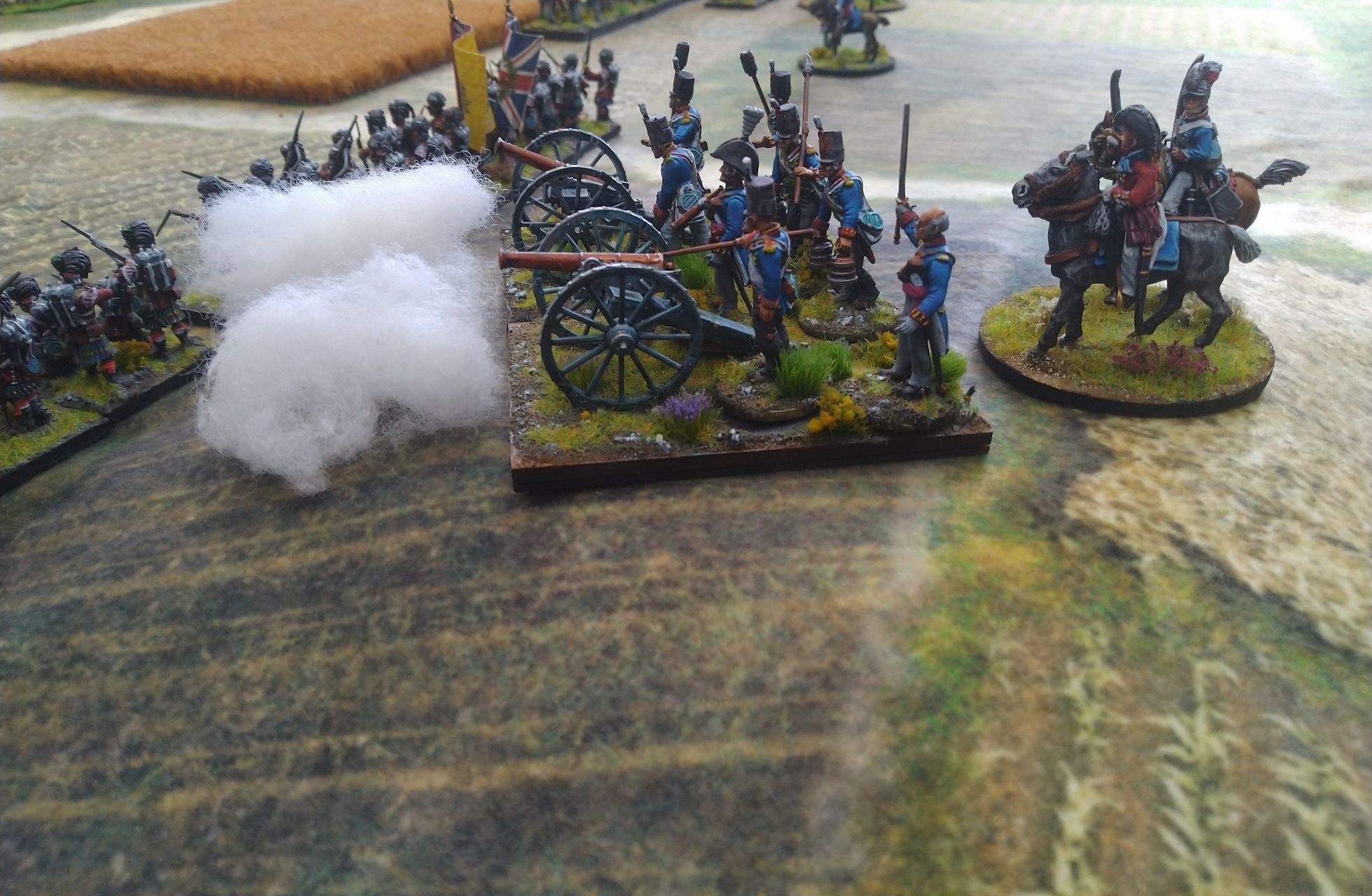
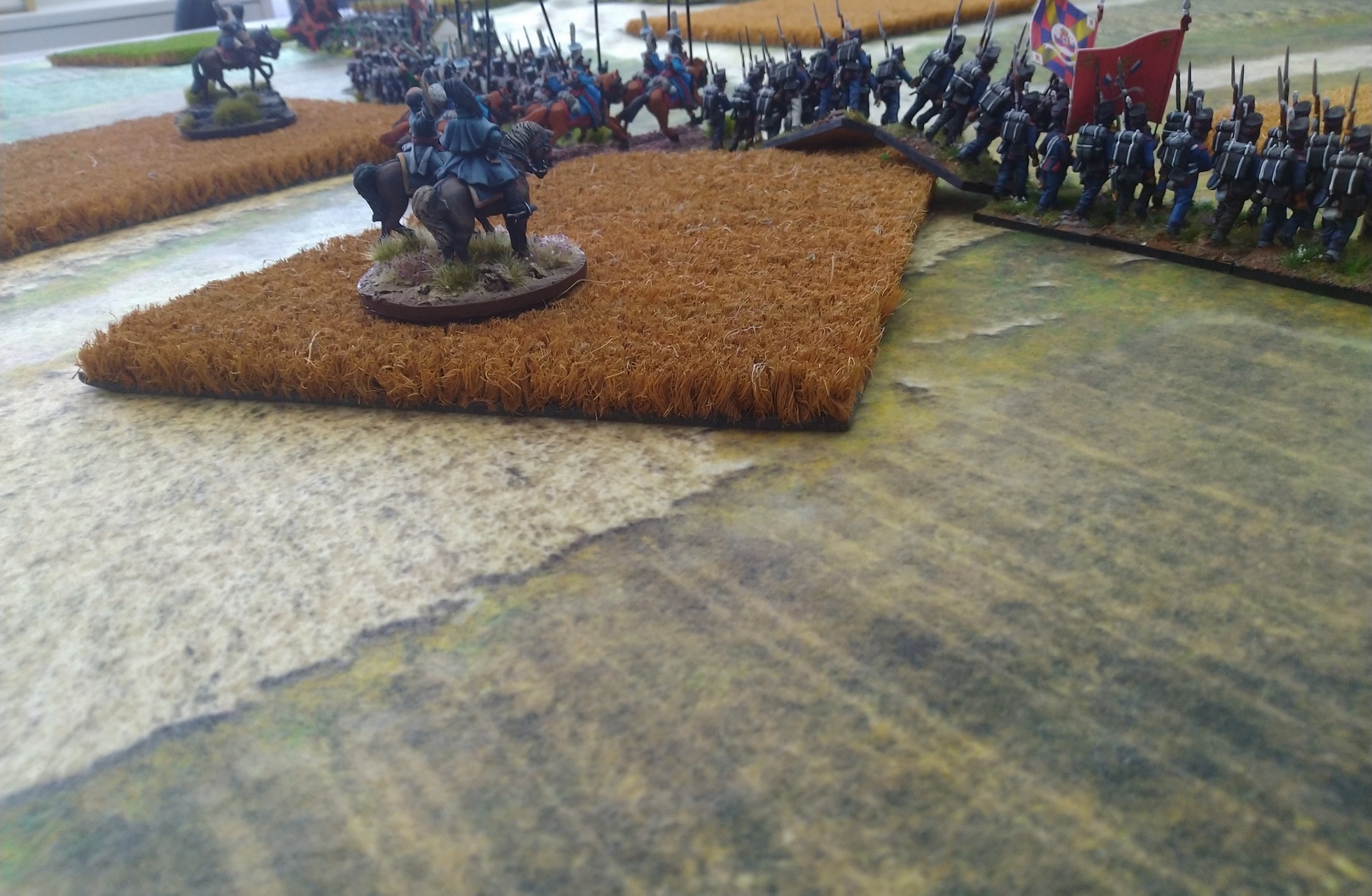
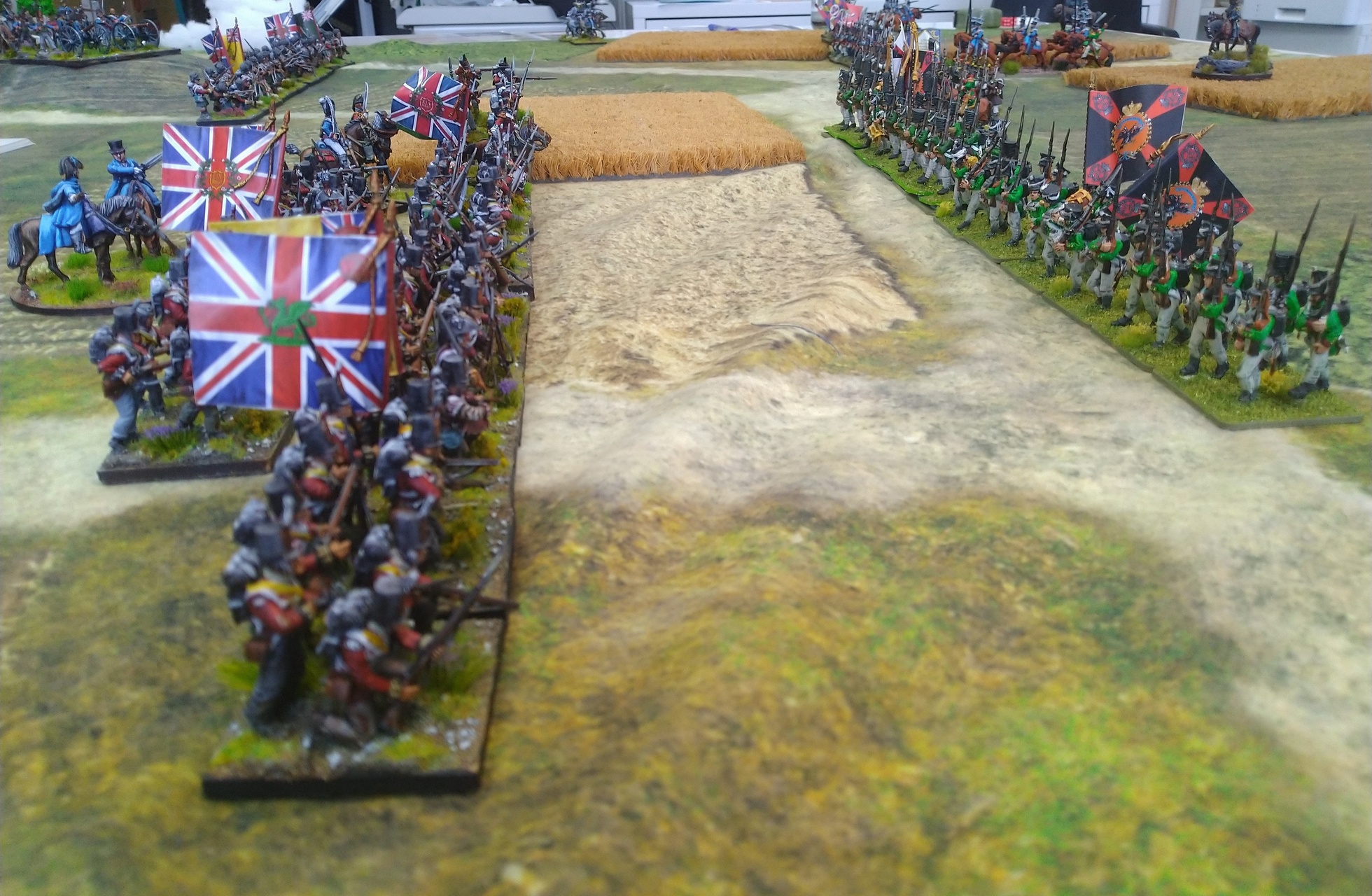
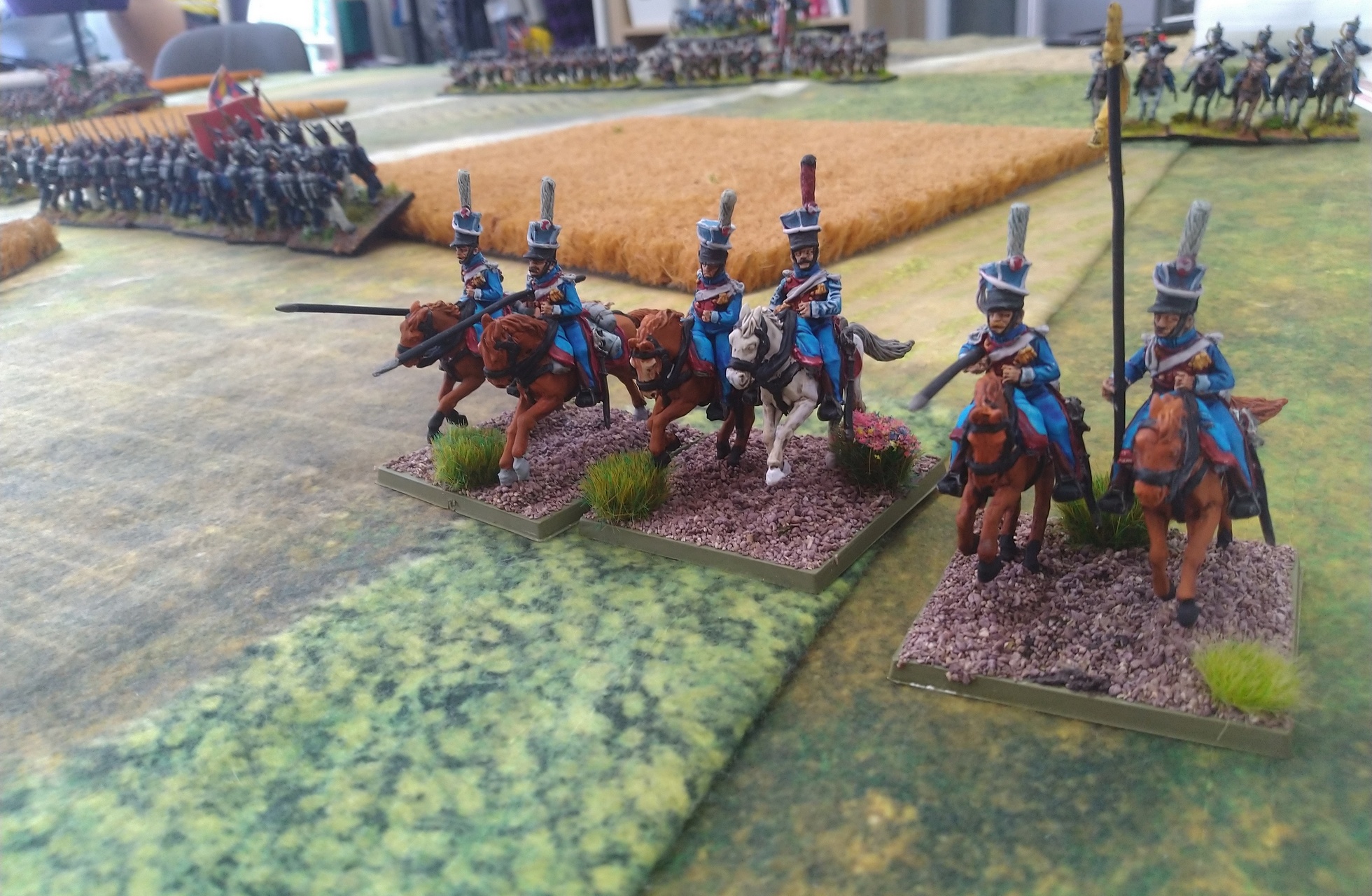
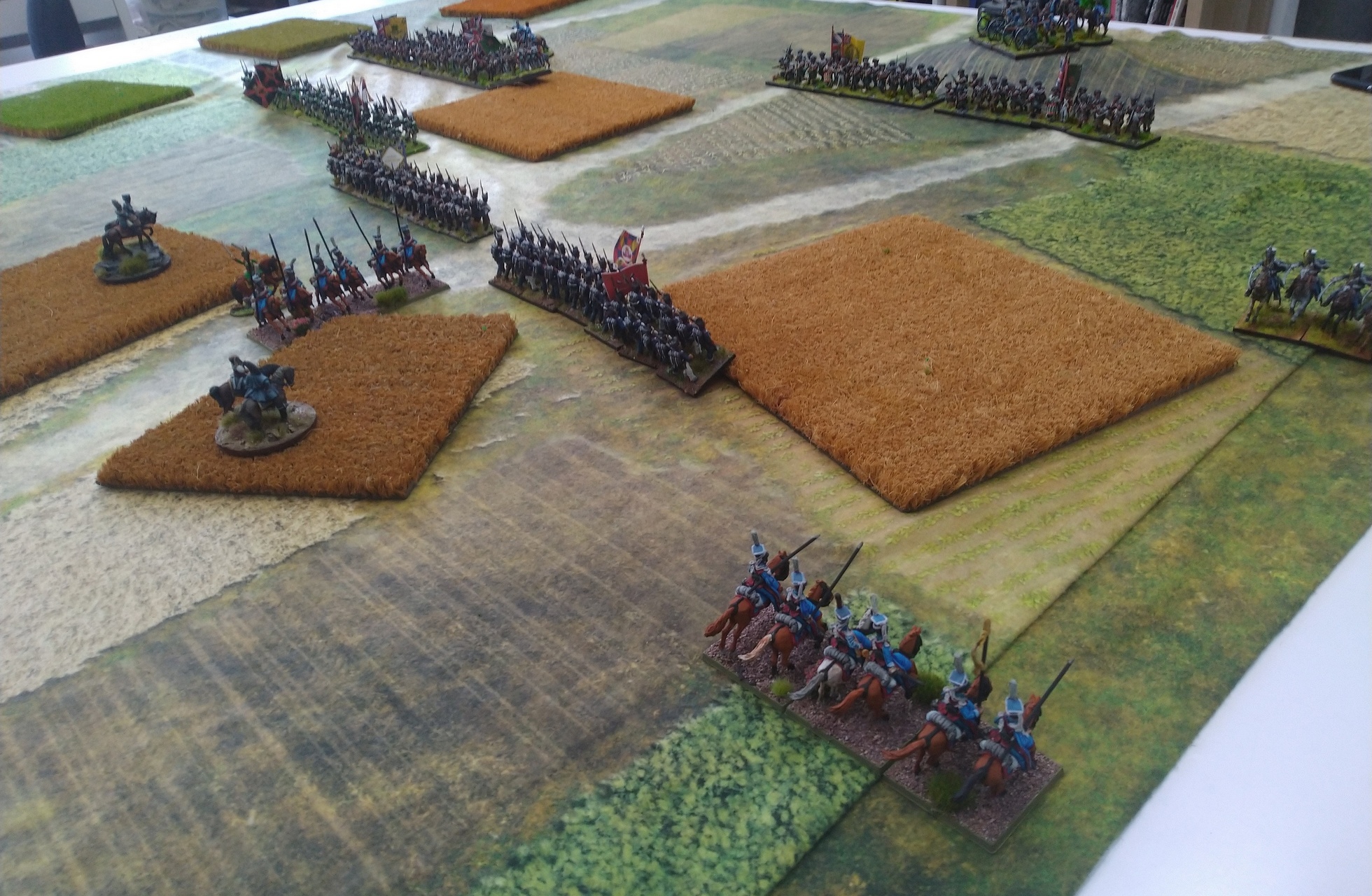
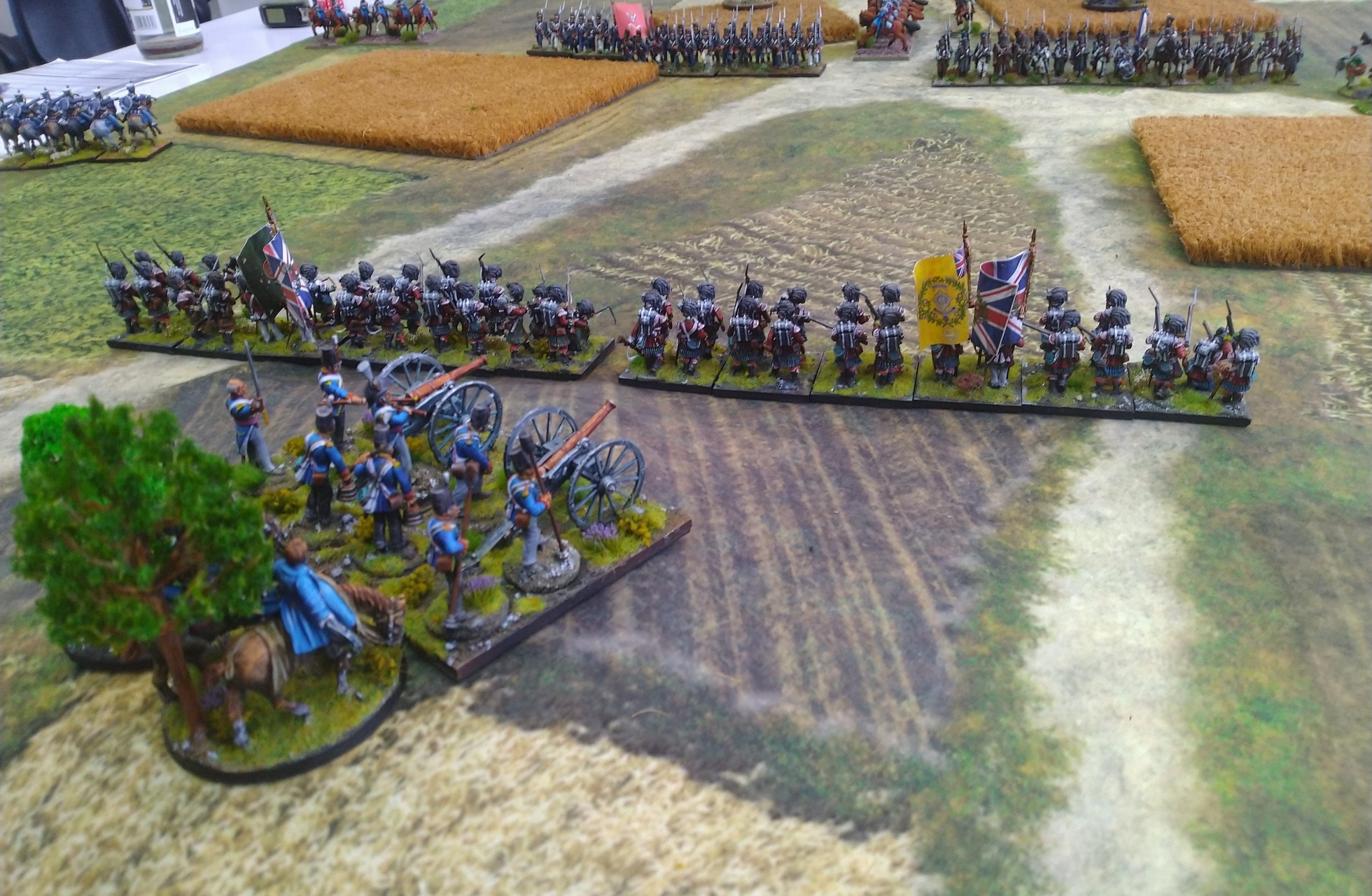
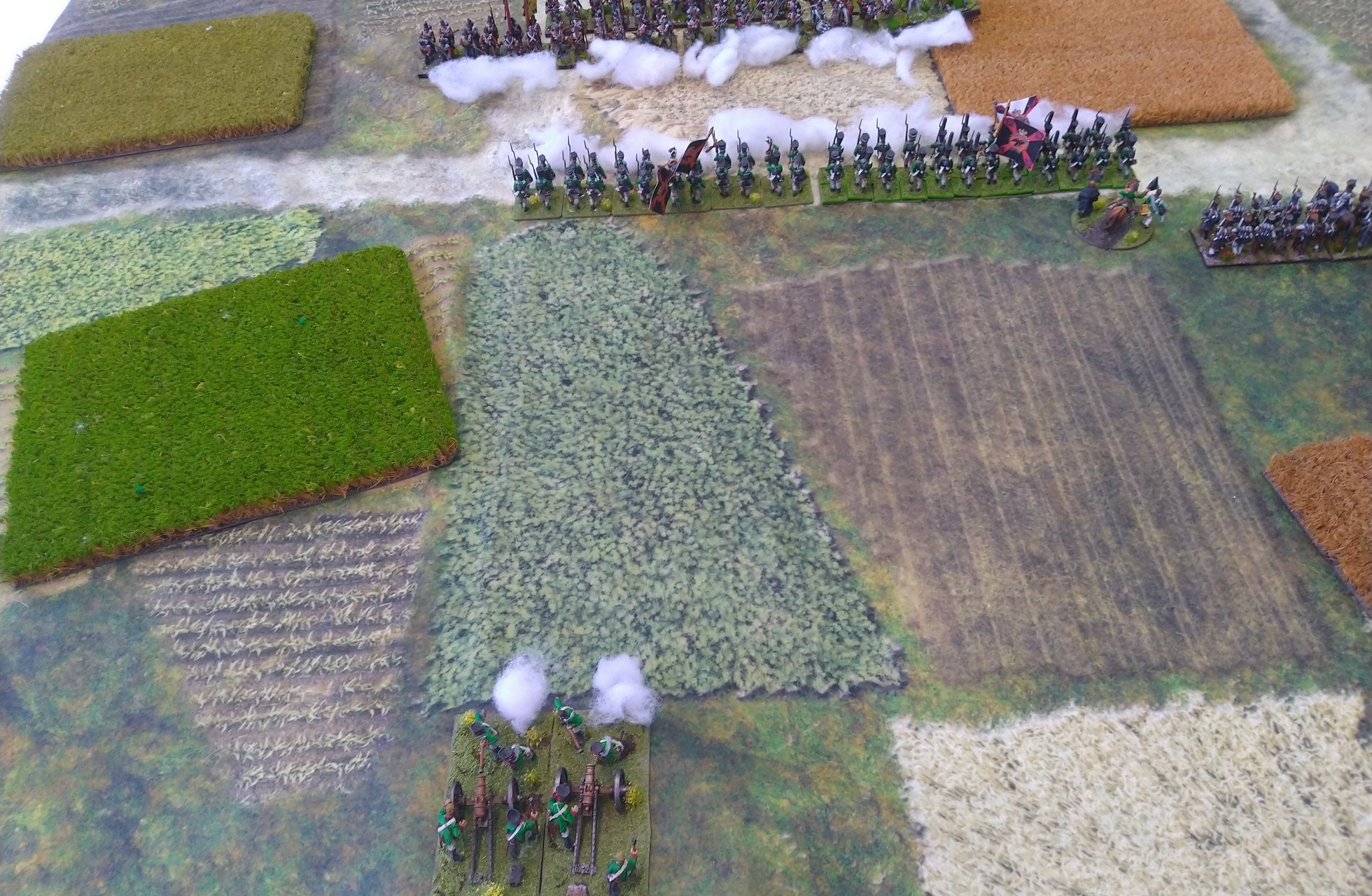
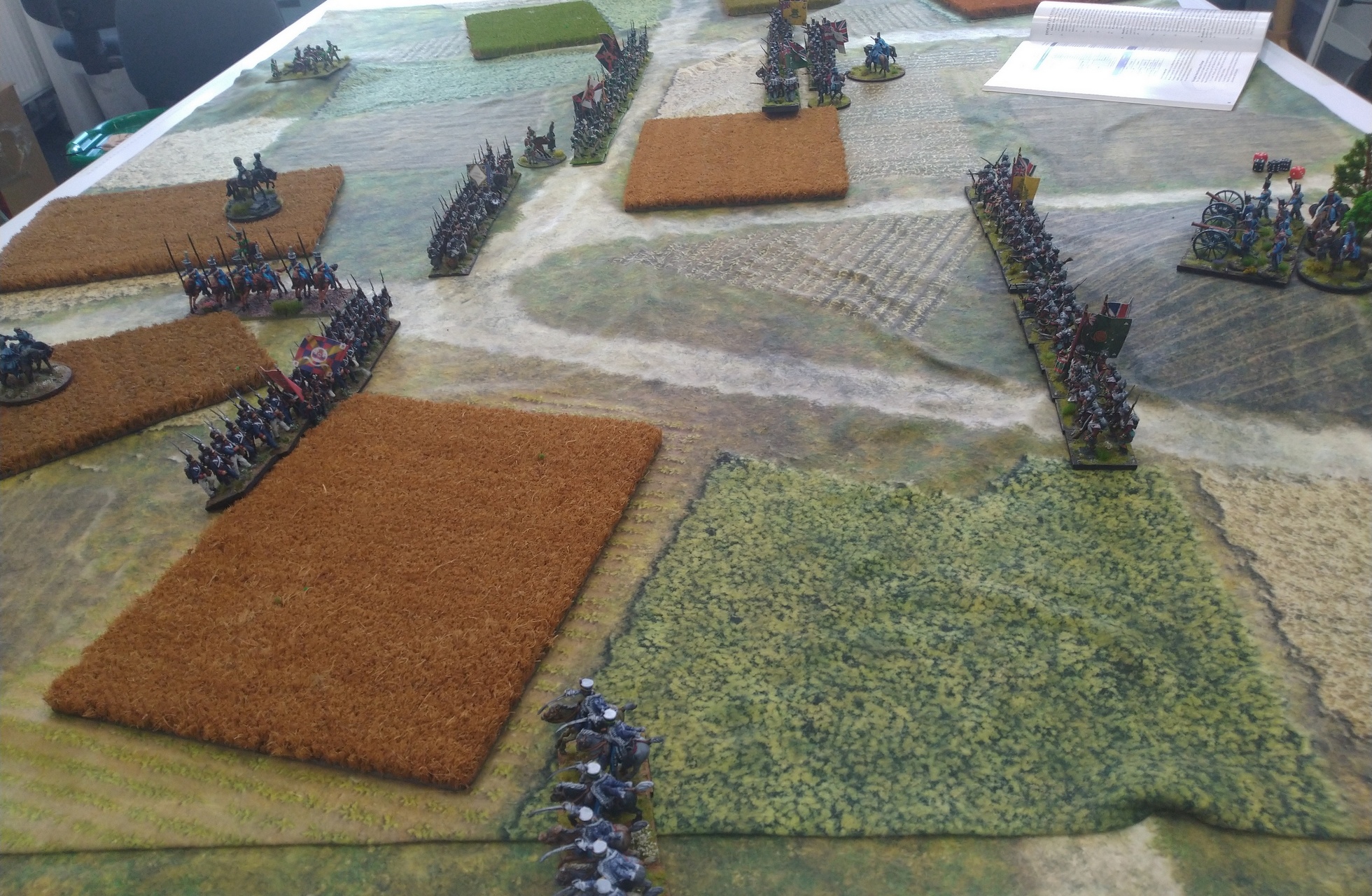
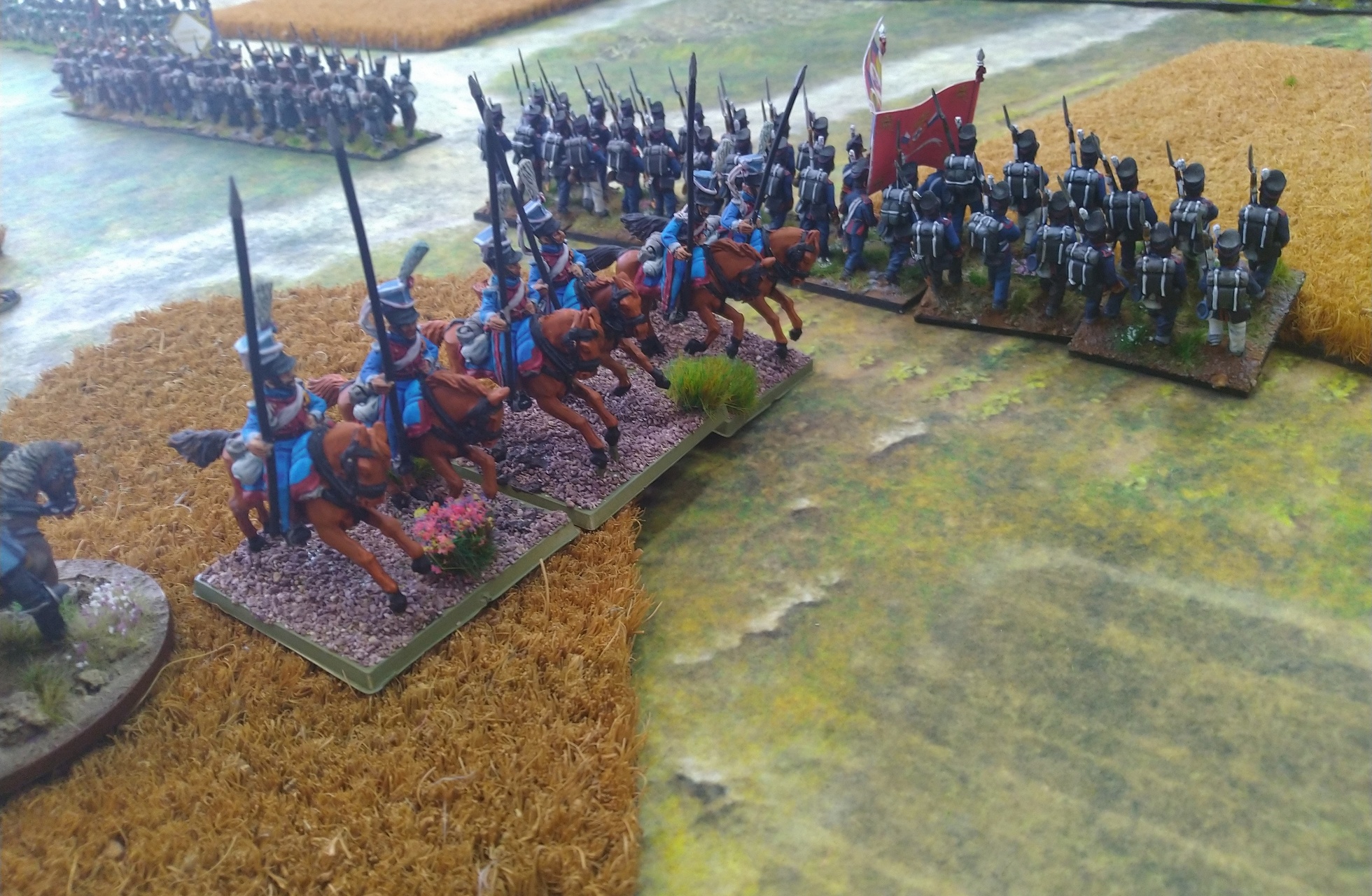
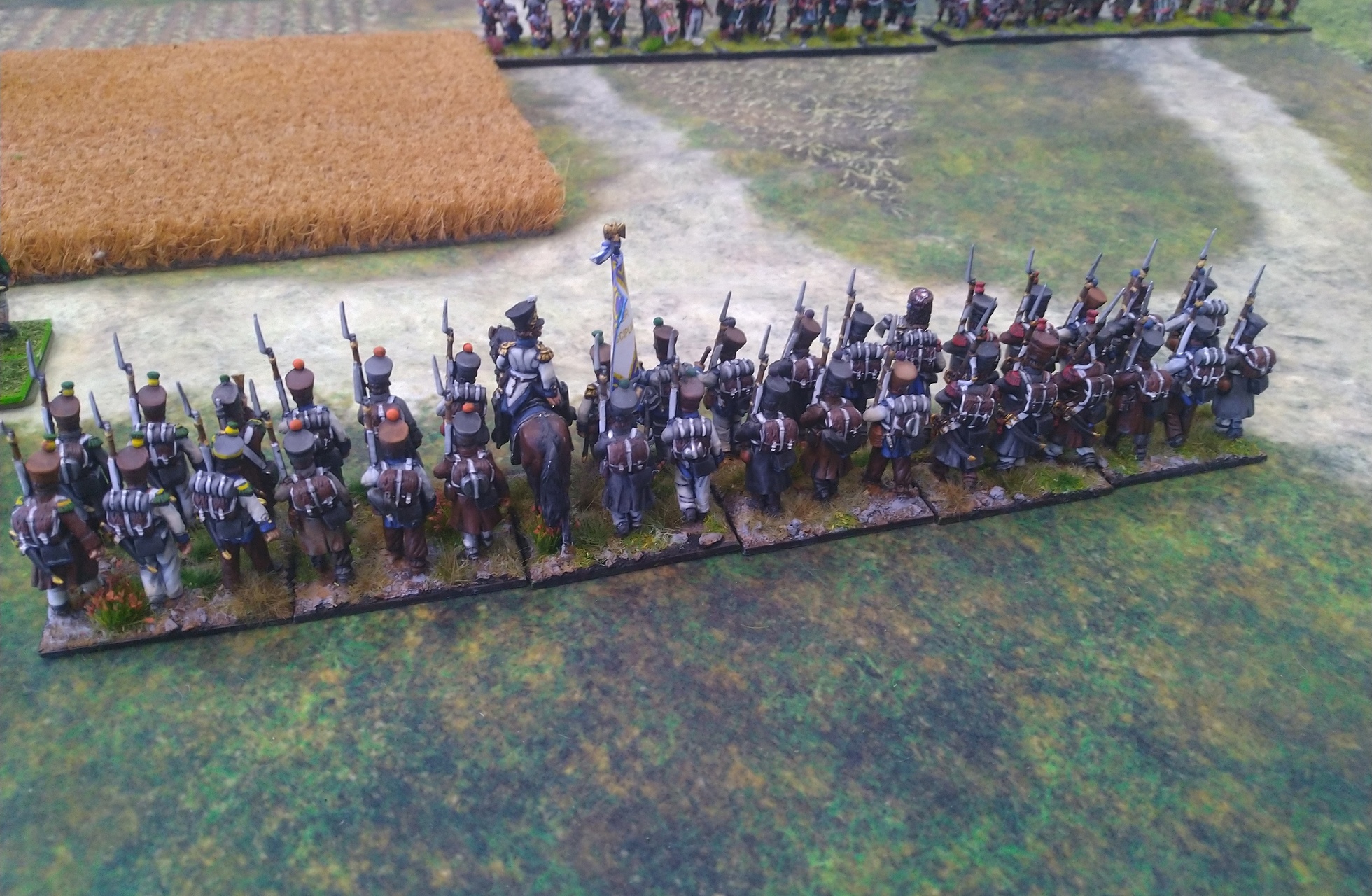
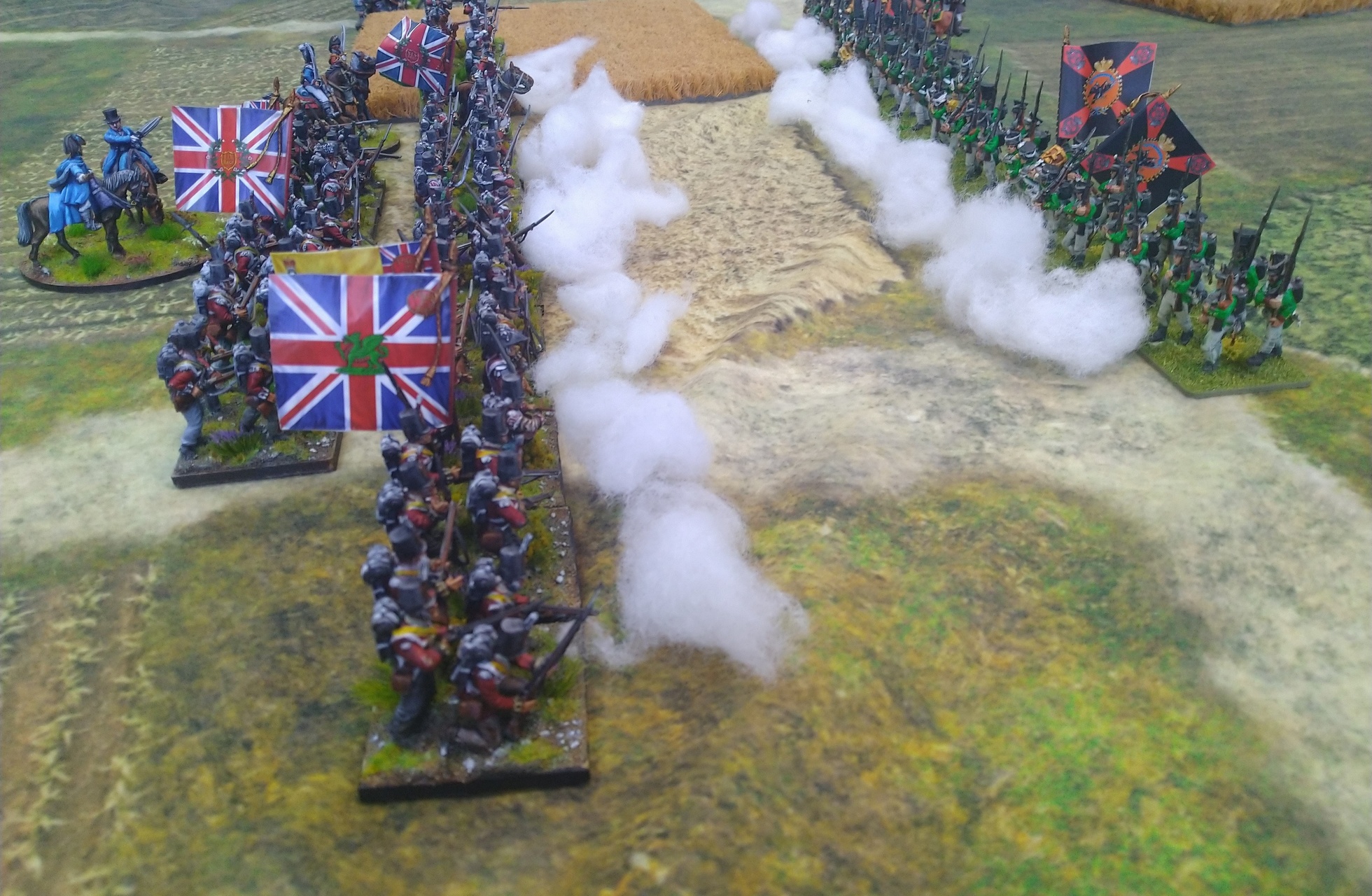
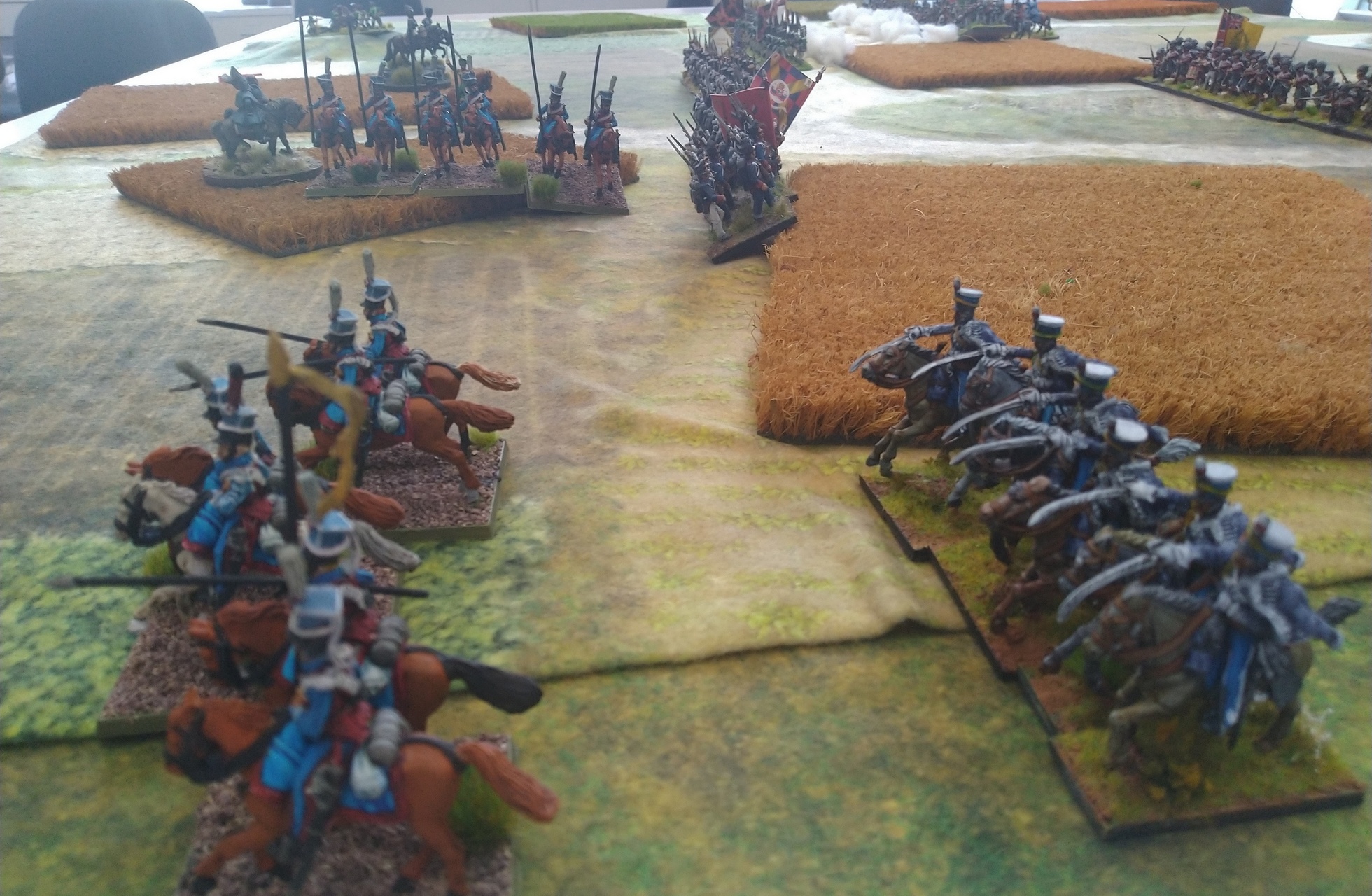
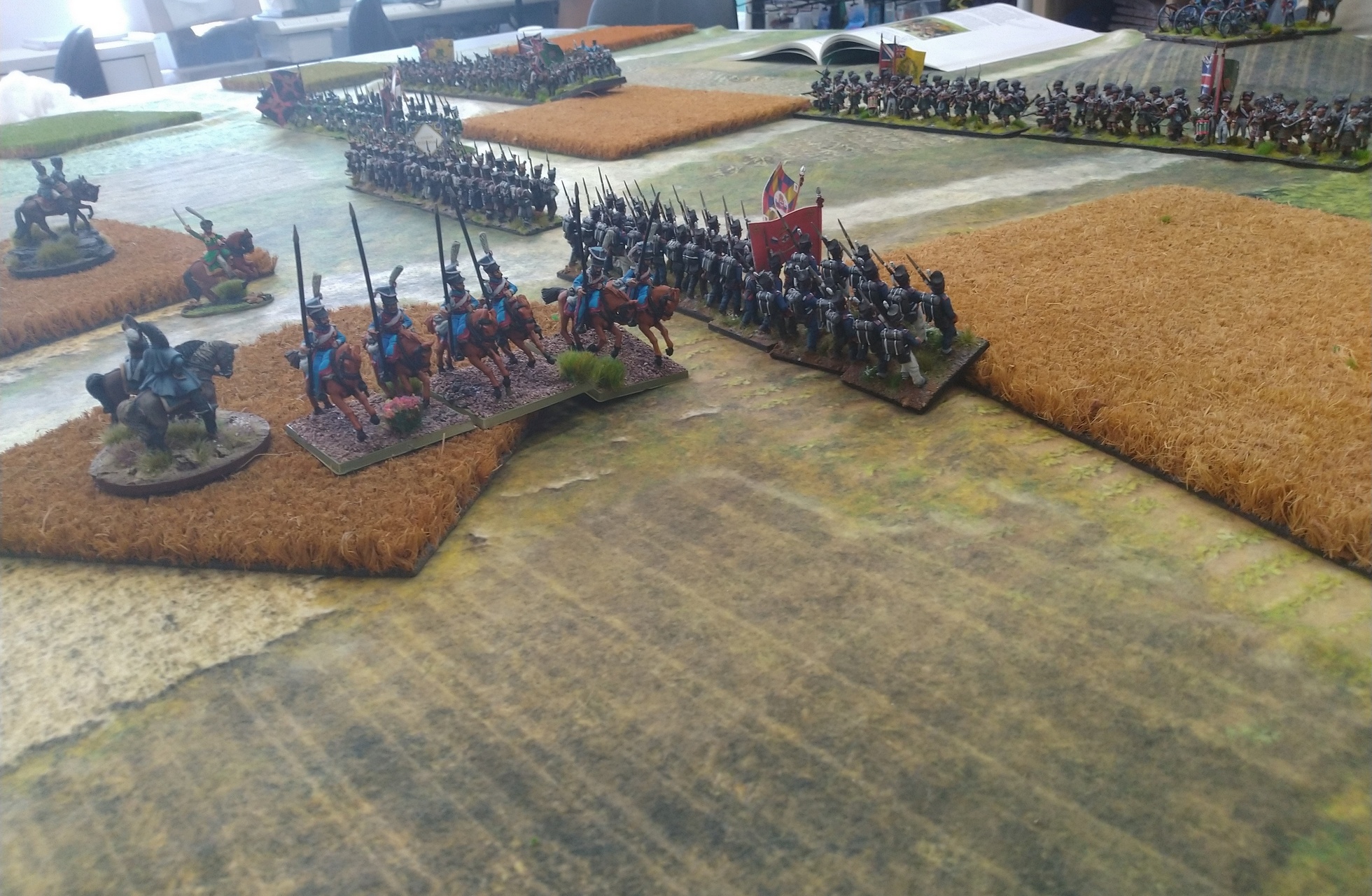
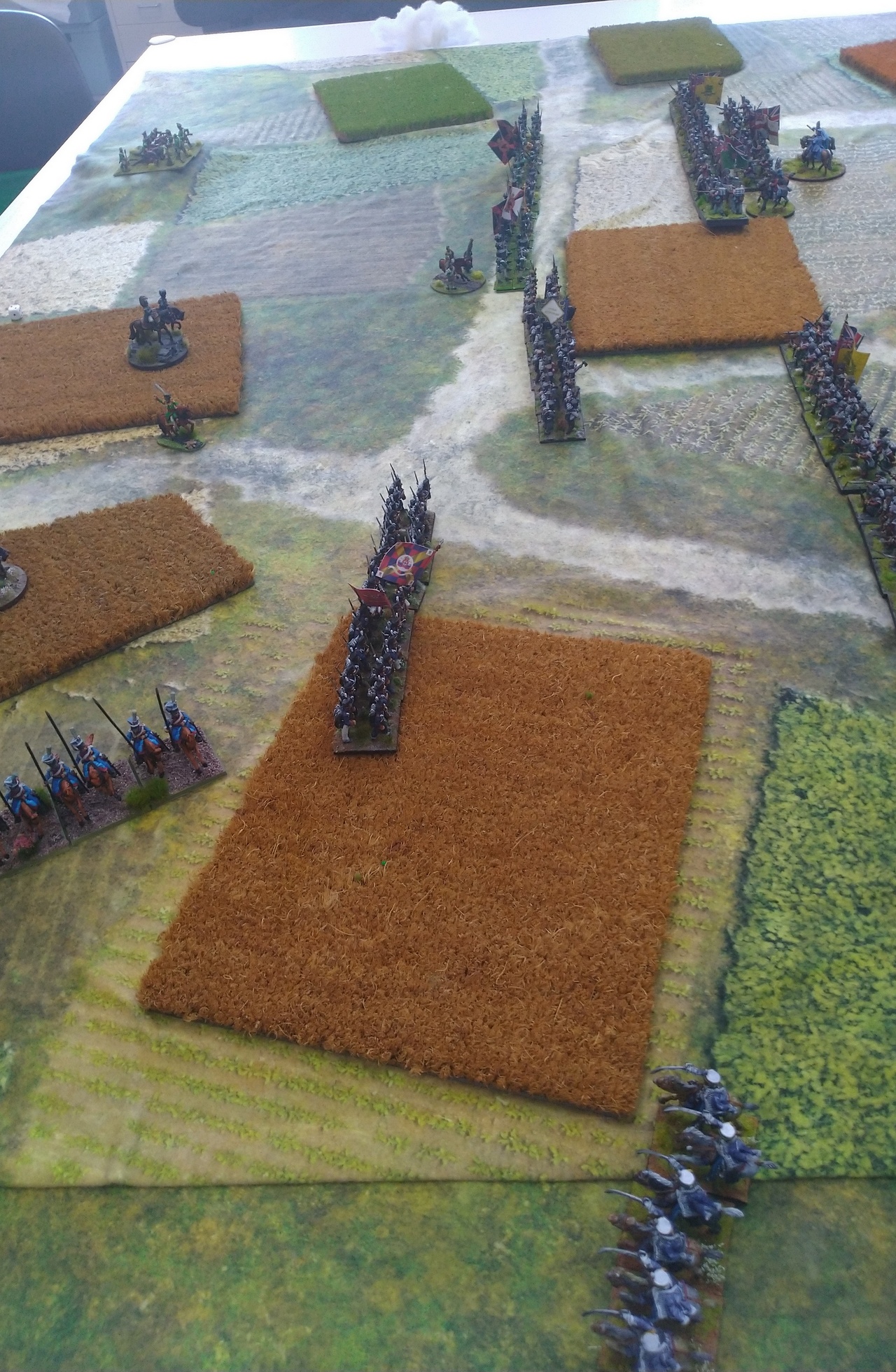
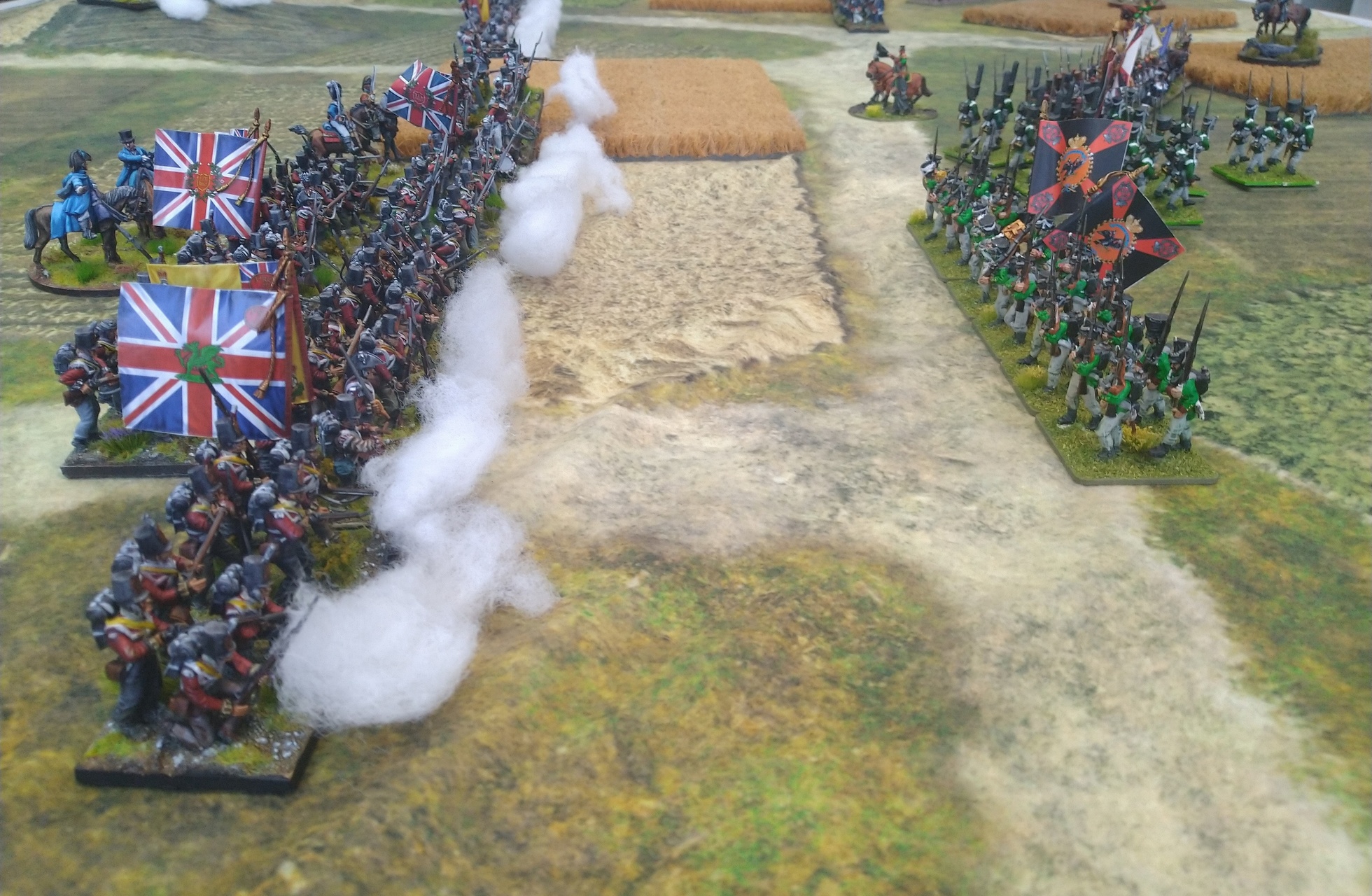
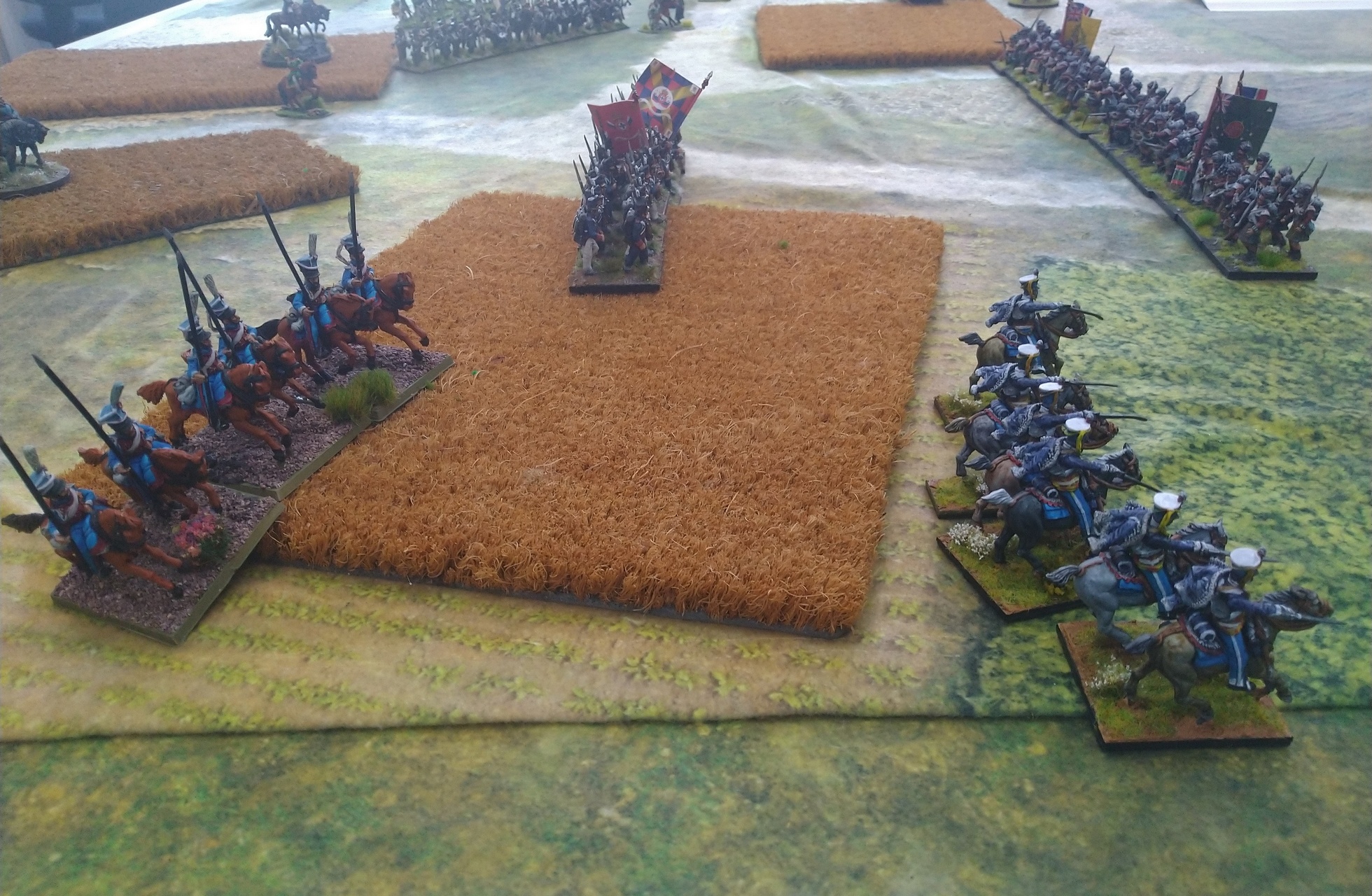
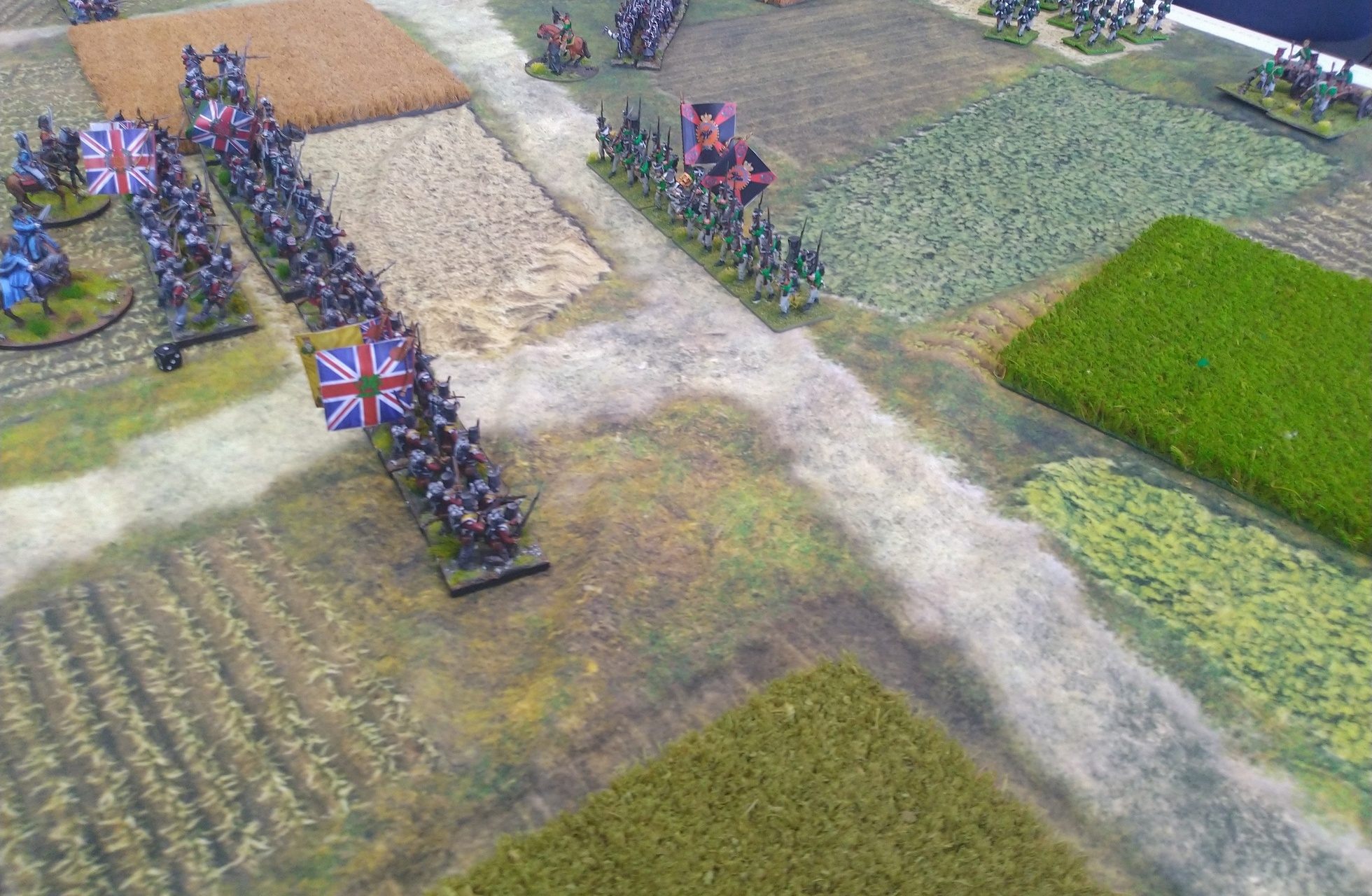
Graliśmy na standardowym stole o wymiarach 48″ x 72″, przedstawiającym skrzyżowanie dróg oraz kilka różnych typów terenu, z których część była terenem trudnym i ograniczała ruch o połowę. Wszystkie jednostki w obu armiach miały status Regular, z wyjątkiem brytyjskiej piechoty, natomiast baterie artylerii miały status Elite. Każda ze stron wystawiła po cztery regimenty i dysponowała maksymalnie czterema kośćmi ADC.
🇬🇧 Yesterday, Tomek and I played another training game of General d’Armee. We are still using smaller armies than those suggested in the rulebook and leaving out some of the rules, as including everything at this stage would make learning the game much more difficult. We do plan to return to those rules in the near future.
On Saturday, we once again played with relatively small forces deployed on the table – no Fog of War, no reserves, and all units visible from the start – simply the easiest way for us to learn the system. Tomek commanded the British, while I led a force made up of Russians and other European contingents, as we wanted to use only painted miniatures.
We played on a standard 48″ x 72″ table representing a crossroads and several different types of terrain, some of which counted as difficult ground and reduced movement by half. All units in both armies were Regular, with the exception of the British infantry, while the artillery batteries were rated as Elite. Each side fielded four regiments and had up to four ADC dice available.
🇵🇱 Podsumowanie:
– Na tym etapie widzę już, że są pewne ważniejsze zasady, które powinniśmy zacząć wykorzystywać w naszych grach. Na razie jednak skupiamy się na podstawowych mechanikach, ponieważ chcemy dobrze je opanować.
– Planujemy wprowadzić więcej zasad następnym razem. W systemie dostępnych jest kilka różnych typów żołnierzy, dlatego moim zdaniem armie do standardowych, towarzyskich rozgrywek powinny być budowane przy użyciu systemu punktowego. Nieregularni Kozacy czy świeżo zwerbowani żołnierze zachowują się zupełnie inaczej niż jednostki Regular, Veteran czy Elite.
– Podręcznik określa również, które formacje mogą być uznawane za elitarne – słynne jednostki, takie jak Gwardia, 95. Regiment i tym podobne. To temat, który będzie wymagał dalszego zgłębienia w przyszłości, ponieważ trzon większości armii stanowiły jednostki regularne albo rekruci, zaledwie z kilkoma wyjątkami. Jednostki mogą się także różnić wielkością — dzielą się na małe, standardowe i duże.
– Rozstawiamy je w bardzo podobny sposób jak w Black Powder. Zasięgi i ruch są jednak krótsze niż w Black Powder. Muszkiety mają zasięg ognia wynoszący 9″, podczas gdy karabiny są znacznie skuteczniejsze, co daje kolejny dobry powód, by korzystać z jednostek tyralierskich, takich jak Jegrzy. Sam muszę w końcu pomalować oddział takiej piechoty. Jednostki poruszają się też mniej niż w Black Powder, co uważam za plus — w końcu nasze stoły nie są z gumy 🙂
– Odkryłem kilka przydatnych rzeczy na tych blogach:Sir Able Brush oraz Chasseur à Cheval — znajduje się tam użyteczny kreator armii, naprawdę świetna robota. Na drugim blogu znalazłem również zestaw zasad o nazwie 321 – Fast Play Napoleonic Rules.
– Na moim blogu pojawi się jeszcze więcej o General d’Armee — potrzebuję tylko czasu, tak samo jak ludzie, z którymi gram.
🇬🇧 Summary:
– At this stage, I can already see that there are some more important rules we need to start using in our games. For now, however, we are focusing on the core mechanics, as we want to learn them properly.
– We plan to introduce more rules next time.There are several different types of soldiers available in the system, so in my opinion armies for standard pick-up games should be built using the points system. Irregular Cossacks or freshly recruited troops behave very differently from Regulars, Veterans, or Elite units.
– The rulebook also specifies which formations can be considered Elite -famous units such as the Guards, the 95th Regiment, and so on. This is something that will require more investigation in the future, as the bulk of most armies consisted of Regulars or recruits, with only a few exceptions.Units can also vary in size, being classed as small, standard, or large.
– We deploy them in much the same way as we do in Black Powder.Ranges and movement are shorter than in Black Powder. Muskets have a firing range of 9″, while rifles are much more effective, which gives another good reason to use skirmishing units such as Jägers. I really need to paint a unit of that infantry myself. Units also move less than in Black Powder, which I see as a plus – after all, our tables are not made of rubber 🙂
– I discovered some useful things on this blog: Sir Able Brush and on this blog Chasseur Acheval – there is useful army creator – really nice work. On second blog I found some ruleset called 321 – Fast Play Napoleonic Rules.
– there will be more about General d’Armee on my blog, just need time – me and people I play.
 tancreddebeauville

Nice looking game! 🙂 Plenty to keep you busy I think!
It was really interesting game🙂. System seems at first to be complicated, but after training games it seems to be good one.
Awesome mate
Thank you 🙂 .